
Welcome to your online lesson notes page Flora!

2026 goals
Play boldly
Fri 20th March 2026
Shostakovich Waltz
- Pizz a bit further down the string (about 2cm down the fingerboard).
- From B, aim to make the sound quality of the A and E strings match as much as possible.
- As long as you manage to get your hand in the right place, 4th position should feel comfy.
Thu 5th March 2026
The Entertainer
- Start with an open string version of the introduction, to get your bow really secure and neat.
- As you do this, ask yourself if you are bumping any notes louder than others? Maybe they need less bow (eg. the B quavers).
- In bar 5, imagine the wind blowing your up bows, and some kind of obstacle in the way of the down bows.
- To practice the tuning of bar 17, set up your tuner and play any combination of the C, D and E, slowly and with long notes, until it settles.
- In Section II, make sure the music is flowing.
- Work on securing the tuning of bar 40: Play the whole bar, hold the C, ask if you think it’s in tune, then check with the tuner whether you were right. Try to get it spot on at least 3 times in a row before moving on.
- Do the same exercise with 44 into the first note of 45. (Remember to keep your ears open so that the G doesn’t get too high).
Fri 13th February 2026
Welcome back! 😊
The Entertainer
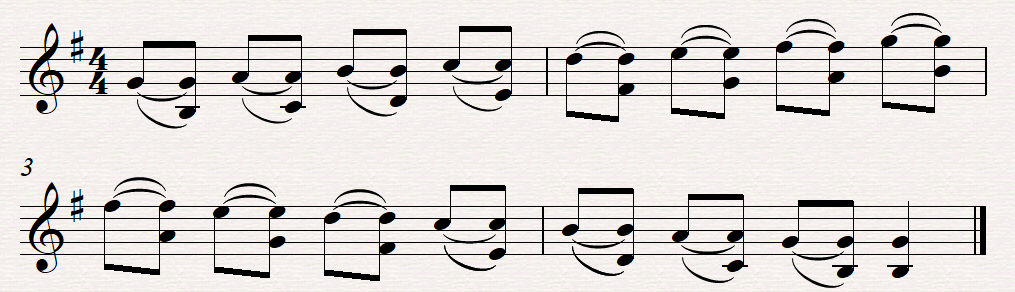
- Work on tuning on the 1st line as you change octave each bar.
- When you’re in 1st position on the A string, listen for the tuning of your 2nd fingers.
- Whenever you have hooked bowing (double up bows), strike a balance between it sounding slurred and very separate – the audience doesn’t need to hear that you’re doing anything different.
- In general, try to play more in the lower part of the bow, exploring the “elastic sling” idea. This will make any retakes feel very natural.
Well done with choosing your own bowings and fingering for this! Now pick out one or two other pieces from your books to have a go at before next lesson (maybe something slow and something quick?). See what bowing and fingering ideas you come up with for them.
Thu 30th October 2025
A nice lesson of duets to send you on your sabbatical! When you feel up to playing a little again, just pick out some old favourites and do a little at a time, with some scales to warm up.
See you in the new year!
Fri 26th September 2025
Pachelbel
- Remember to think ahead at the end of each 2-bar phrase, so you can smoothly transition into the next rhythmic pattern without disturbing the tempo.
Schubert Sonatine: Andante
- Use less bow at E, so that your quiet playing can have a really focused sound.
- Remember to aim for a smooth slur from the turns to the following semiquaver.
- Keep a calm mood as you play this through.
Thu 4th September 2025
Schubert Sonatine: Andante
- Work on your bow distribution from E – remember this is p, so use your ears and make sure there are no bulges at the start and end of bows. Also, see how smooth your string crossings can be (in terms of matching the sound).
- Keep the bow smooth on the turns, and be careful of the tuning of each tiny note within the turn.
Thu 14th August 2025
Italian pieces and Schubert 2nd movement. Remember to count at all times!
Thu 17th July 2025
Schubert Sonatine
- Allegro molto:
- Count the minim rests carefully, and think about keeping the pulse the same as you change from a minim-y section to a quaver-y section.
- There were a few places where tuning could have been more precise, so look out for those too.
- Andante:
- This is great practice for slow & controlled rhythmic playing, counting mainly in 4.
- Move your bow calmly, to match the mood of the piece.
- Watch out for the key change at B, and then back again.
Thu 26th June 2025
Tango
- Working on trills at the top of the page, make sure you’re noticing the folloing:
- Intonation of both trill notes;
- Clear rhythm of the two notes after the trill;
- Bowing;
- Shifting (or not!).
- When working on the second halves of these bars, start from a position of thinking of the intervals, then let your ear take over – they should sound normal!
Handel Allegro
- Set up a tuner as you work on this, and every now and then, stop on a note and check the tuning.
Sicilienne
- Work on the timing on the central section.
Schubert
- Work from F and make sure you’re really certain of tones and semitones for the changing tonalities.
Thu 12th June 2025
Tango
- For clearer harmonics, bow firmly, nearer the bridge.
- For any “easy” bits, prioritise rhythm and style – imagine a tango dancer.
- Also in these sections, look ahead with the slurs to make sure you leave enough bow.
- For the double stops, be bolder with your bow – it should rarely leave the string. A good tone will make all the tuning easier to hear.
- The trills on 2nd page are all tones.
- A note on tenuto marks (_ _ _) – under a slur, the bow should be separated.
- When practising the trill section, work on the first half of each bar first aim higher with your trills –
Tue 20th May 2025
Albeniz Tango
- Spend a bit more time getting used to the feel of the first two bars: “don’t practice ’til you get it right – practice ’til you can’t get it wrong”. Try to link the semiquaver musically to the harmonic.
- With the triplets in bar 3, make sure you have good contact with the string and don’t use too much bow.
- In any bars with both duplets and triplets, relax the duplets.
- Practice the finger exercise at the top of the page to help with independent fingers, whilst constantly checking your left hand is as relaxed as possible.
- Make sure you are articulating all the slurs with tenuto marks underneath them.
Thu 27th March 2025
Albeniz Tango
- When your practising the first 2 bars, get really good at the harmonics without the semiquaver upbeat. Play minim rest, minim harmonics, minim rest, minim harmonics. If you’re struggling to get your bow on both strings, start with an open G and D. Let the bow balance on both strings, rather than trying to control it too much.
- Working in little sections, make sure you’ve let your head be swept into any new keys we’ve modulated into!
- There are 2 ways to approach the double stop section. Method 1: when working as double stops, work in teeny tiny overlapping sections. Remember to keep relaxing your hand between attempts. If your left hand ever starts cramping or hurting, stop and come back to that section later!
- Method 2: only play either the top or bottom line, making sure you use the correct fingers. Once you’ve got your head around that, progress to playing only one line but having your fingers on for both.
Schubert Sonatine
- Try this a little faster now, and keep analysing the gaps between the notes for reliable intonation.
Thu 13th March 2025
Dance of the Tumblers
- Practice the two different fingerings on the matching phrases for tuning and smooth shifts.
Tango
- Make sure you’re playing the right rhythm in bar 3.
- Use your tuner to help you with the chromatic line in bar 5. Trust your finger spacing.
- At fig. C, make sure you’re thinking lots about the placement of your fingers, rather than following your ear.
- Work with the tuner from fig. D.
Thu 6th February 2025
Beethoven 2nd Symphony Larghetto
- Choose a tempo which makes even the fastest notes feel relaxed.
- At 82, enjoy the difference between the smooth slurs and the staccato notes.
Thu 23rd January 2025
Beethoven 2nd Symphony Larghetto
- Try to keep a steady quaver tempo as you play this – it should never feel rushed or panicked!
Thu 9th January 2025
Haydn
- Have a listen to some more Haydn – string quartets and symphonies, plus a violin concerto.
- Warm up with as many B flat major variations as you can. Be really precise with your intonation – remember to use a tuner if you’re unsure.
- Work on the 5th bar of fig. C in detail, thinking about spacing and shifts. Work slowly and with good tone quality so you can really hear the overtones ringing freely as you improve the intonation.
- At fig. D, listen to the sound quality of the two crotchets at the tip.
- In the Romance at fig. B, remember to keep your intervals the same size despite being in half position.
Thu 12th December 2024
Haydn
- Remember to hook the bowing in bars 9-10.
- Practice from bar 20 to have a steady footing for the next line.
- Keep a consistent speed in the syncopations. Don’t get your eyes stuck in the music – instead, be ready for the dismount!
- In the Romance, just before you start the half position section, think about the nut being another finger, and then your 1st finger being being placed a close semitone away. Use a tuner to help you with the shift down at the end of the section.
- Practice the bar before C for timing and smooth slurs.
Bizet
- Listen to this to see if you like it!
- Practice the triplet sections.
Satu 7th December 2024
Orchestra music.
Mon 11th November 2024
Schubert Sonatine
- If you’re working on tuning (eg. fig. F), don’t use vibrato.
To look up orchestra parts, visit imslp.org .
Thu 31st October 2024
Schubert Sonatine
- In the first half, focus on how the different dynamics can also bring different moods – how will you use your bow differently for each section?
- At the start of the 2nd half, to be in tune you’ll have to be meticulous with your finger spacing. This will help the tonality make sense.
- At fig. F, once you’re in 4th position, use your 1st finger as an anchor. Listen carefully to the note relationships – low B natural in the 5th bar can help you with high B natural in the 6th bar etc.
- Don’t disturb the whispered tone at fig. G.
Fri 18th October 2024
Canson Indou
- Slot together all your acquired knowledge on tones, semitone and anchors. Try to keep as many fingers down as possible!
Schubert Sonata no.1: Allegro molto
- Play a D major scale and arpeggio to warm up, then be very precise with your tuning of the first 3 notes of the piece.
- Be very mindful of the placement of your C#.
- Check last time’s notes for my other suggestions of new pieces to look at.
Tue 10th September 2024
Music books: use the ABRSM books as sight-reading practice. If you find a piece you particularly like, bring it to a lesson.
Canson Indou
- Chromatic scale: On the way up, focus on the 12/8 time signature (3 groups of 4 quavers in each octave). On the way down – work on the tuning of your 4th fingers.
- G major scale in harmonics (see tips below).
- In the piece, work on the tuning of the very high bits. Ask yourself lots of questions about intervals between notes.
- Otherwise, make your main focus the sound quality. It would be great to have a richer sound at the start.
5 tips for really clear harmonics:
- Play near the bridge;
- keep the bow firm;
- Keep your 1st finger firm;
- Keep your 4th finger light;
- Be precise with your 4th finger placement (try to keep the shape of your hand consistent, like when playing octaves on the piano.
Start having a look at Kreslier La Précieuse, Corelli Sarabande and Gigue and Schubert Sonata no.1.
Fri 26th July 2024
Chanson Indou scale warm-ups
- Chromatic scale: try to think in a 12/8 time signature, with 3 groups of 4 quavers in each bar. Use the same fingering coming down as you used going up.
- Harmonic scale: play a 2 G major octave scale just using open strings and 1st fingers, with a consistently firm bow. You won’t need to go above 3rd position. Next, try adding the light 4th fingers above, keeping the following tips in mind:
- Placement of 1st and 4th finger; firmness of 1st finger and lightness of 4th finger; bow’s firmness and proximity to bridge.
Thu 27th June 2024
Chandon Indou
- Keep the melody line going with your bow so that the shifts don’t disturb the flow.
- Before tackling the section from 21, practice a 3 octave chromatic scale in G. Every string is 0121234, then on the E string it’s 012 123 123 123 1234.
- From bar 21, make sure you’re counting your long notes carefully, and that you’re not delaying the next barline.
- At bar 30, really differentiate (!) the C natural from the C# in the previous bar.
- In bars 45-46, keep your 1st finger on the whole time.
Thu 23rd May 2024
Chanson Indou
- Warm up with G major 3 octaves (scale and arpeggio). The scale shifts once on the A string, once on the E string (with 4th finger extension), then once on the way down on the E string straight to 1st position.
- Practice your shifts bars like 6 and 13 without a shift first, then with the shift, so that you have really felt the size of the interval.
- In the piece, whenever you have the bowing pattern like bar 7, make sure the sound quality of the separate quavers matches the quality of the slurred ones (good contact with the string but not too much bow).
- Practice bars 21 and 22 a few times in isolation, so that your ear gets used to the difference.
- Stop and think about the mechanics of the shift into the start of bar 23.
- From bar 21- 58, make sure you’re always feeling the 3rd beat on your long notes before you move. Try to do all of your thinking on the long note – that means you’ll be thinking ahead to the next downbeat.
- Work on getting the B flat at the start of 26 really secure (the tone and a half is a bit bigger than you think!).
- In bar 49, try to keep your 1st finger as an anchor.
- Play bar 49 and the first note of 50 a few times, settling the first note of each bar with the tuner.
Fri 17th May 2024
Berceuse
- See if you can memorise this over the next few weeks. Try to memorise the fingerings and dynamics as you go, not as an after-thought. Working one or two phrases at a time will be really helpful.
- For any shifts in this piece, make sure you properly shift rather than reaching. This way your hand will be ready for accurate tone and semitone spacings.
- Practice bars 19-22 lots so that the shifts become 2nd nature.
- For the octave shift in 20, lead with the top note’s finger.
- On the last 2 chords, aim for the 2nd fingers first, then find the other notes.
Fri 10th May 2024
Handel Allegro
- Keep practising F major in 5th position so that it starts to sound easy.
- In the piece, work on the passagework, noticing patterns so that you don’t need to be reading all the notes all the time. In general, your bow can be more on the string as you play these bars.
- For bars like 14, use open strings to get the bow working well.
- Work on the tuning in bar 21.
- In the bariolage bars, make sure the sound quality is clear on every note.
- Remember to keep the quavers paintbrushy.
Berceuse
- Revisit this calmy, taking time to really ask how the fingerings work.
Thu 11th April 2024
Schindler’s List
- Create the right atmosphere. Think: nostalgic, calm, smooth, haunting. Try and get into this mindset before you start.
- Everything should be well connected – try not to suddenly speed the bow up just before the bow changes.
- In this calmer mood, you can slow down your shifts and be more mindful about them as you go through the piece.
- Try to think about runs of quick notes in slow-motion (end of 33 and 41). This will give you a chance to get groups of notes set up properly.
Handel Allegro
- At the start, use the lower half of the bow.
- Make sure you’ve got good contact with the string on the semiquavers.
- Aim for the quavers to be short in a soft, light way instead of robotic. The only quavers that should be long are those in a beam with two semiquavers.
- Keep the F naturals lower.
- Working from bar 9, work in the upper half of the bow.
- Try to keep your bow as straight as possible, making the string crossings from the wrist rather than the arm.
- To control the dynamics, start near the fingerboard with little bows. As you increase the dynamic, use more bow and come closer to the bridge.
- Work on the dynamic contrast at 15-17.
- From 21, practice the bow stroke on open strings first to get a really strong sound. Practice switching to the p too.
- Once you’re used to the notes, work on the contrasting dynamics.
Czardas
- Start working on this with a strong bow.
Mon 25th March 2024
Schindler’s List
- Give yourself room on any “fast notes” – semiquavers and demisemiquavers.
- Careful not to hold the 3rd beat of 27 for too long (don’t delay the 4th beat).
- Don’t forget to rall. into the new slower tempo in bar 34, and keep practising the last beat in tiny segments to get it really clarity. Keep the bow clean as you do this – no whispyness!
- In 39, stop the down bow a bit earlier so that you just melt into the up bow (then you can hit the ground running with the demisemis).
- Leave yourself enough bow for the end of bar 41.
- At 43, observe the diminuendo – use less bow on the semiquavers and end right at the tip.
- On the high shift in bar 47, know your distance and slow down the shift as you approach your destination. Smudge the start of the shift, using harmonic pressure on your finger.
Mon 18th March 2024
Schindler’s List
- Always warm up with D minor and REALLY concentrate on the tuning.
- Fantastic first section – use this as the vehicle for setting a constant vibrato going (this will hopefully then last into the sections where you have harder notes on on your mind).
- Practice the shift in bar 10 very intentionally so that you know exactly how that distance feels. As you shift down in the second half of the bar, keep the vibrato light and make the shifting movement mirror your bow movement.
- Flick a switch on the upbeat to 12, adding more substance to the sound.
- To get the tuning settled at the start of this second section, work with the tuner on your 5th (first few notes of 12). Try to get to the stage where you really know how your hand should feel when it’s in tune. Next, add the upbeat.
- Do the recorder stretch to help the base joints of the left hand resemble crenels on a castle. This will help bar 18 in particular.
- Work on 22-23 with the metronome set to 120 (quavers).
- Get used to your fingering at 33.
Wed 6th March 2024
Schindler’s List
- Stay on the first note for quite a while – I’ll let you know if it’s too long!
- Practice the link between the first and second sections (starting at bar 9) to solidify the shifts and intonation. Remember you don’t need to shift for the octave A on the transition.
- In bar 14, bring your 2nd and 3rd fingers to meet your 1st finger.
- Be on the lookout for your crotchet upbeats – make sure they are all full length.
- Try to subdivide into semiquavers from bar 22. Careful not to rush the two semiquavers at the end of 22 and be very precise with the timing on the 3rd beat of bar 23.
- Work on the bowing in bars 24 and 25.
- Take your time in bar 29, especially on the triplet, to return us to the opening tempo.
- In the section from 30, you can check any of your high Es with the harmonic.
- Shift properly for the high F in 30.
- Think of any Cs in this passage as a downwards magnet – use your tuner to check them. Work especially on the two Cs in bar 35.
- Once you’ve found certain notes in tune with your tuner, make sure you notice how the gaps feel so that you’ll be able to recreate the finger positions later without the tuner.
- Well done in bar 36 for making both pairs of notes sound the same!
- In 38, listen carefully to make sure the open Ds blend in with the fingered notes.
Mon 26th February 2024
Schindler’s List
- Now that you’re happier with the notes of the first page, think about adding lots of gentle vibrato.
- Linger on your first crotchet.
- Let the quavers flow, making sure your bow is moving very smoothly as you cross strings and change direction.
- Make sure you count the longer notes and rests precisely.
- At bar 12, make a real backwards extension with your 1st finger rather than shifting.
- In the second half of 14, remember to bring your hand back into its normal shape, rather than the extended shape you have been in for the past few bars.
- In bar 36, see if you can make the first pair of notes sound as similar to the second as possible, despite shifting down to 1st position on the second pair.
- To get used to the sound of the last 2 notes, practice from bar 43 and play the last 2 notes an octave lower a few times. Next, miss them out completely and sing them instead of playing them. Once you’re certain of them, use the 2nd finger to lightly glissando up to the top notes.
- On the last note, keep your right hand as light as you can as you change bow in the middle (as inconspicuously as you can!).
Mon 19th February 2024
Schindler’s List
- Get used to the new fingerings.
- Try making some of the shifts audible.
- Try to vibrato on every note.
Mon 5th February 2024
A lovely jam session with your new piano! 😊
Mon 29th January 2024
Try to tune calmly and with substance to the sound.
Nimrod
- Warm up with the scles as usual.
- In the diminished 7th, start in 1st position and use your open A string.
- Eb 1; Gb 3; A 0; C 2; Eb 4; F# 1; A 3; C 2; Eb 4. Remember the top 2 notes are in 4th position.
- Remind me to teach you the related double stop scales next lesson!
- Count in quavers for a lot of this.
Morning
- Make sure any vital pencil markings are definitely legible! Rub out any you don’t need anymore.
Marriage of Figaro
- Start practising from line 3 to get into the feel of it.
- Play the crotchets from bar 14 with a lighter bow (banana bowing!).
- Try doing the crotchet chords with alternate bowing to keep it light.
Mon 15th January 2024
Scales
- Reminder of how to make a dominant 7th (4 note names):
- Identify the 5th of the key;
- Play the first 3 notes of a major arpeggio;
- Add a minor 3rd.
- Reminder of how to make a diminished 7th (4 note names):
- Stack minor 3rds on top of each other.
Marriage of Figaro
- Play this at a comfortable speed and aim for evenness through all the notes.
- Keep the bow on the string in the rests.
- Work with a metronome, starting at minim=70.
- Make sure you don’t accent the main beats in any flowing quaver passages.
- Play bar 13 off the string. Practice it on one note like we did in the lesson, and maybe warm up with the flexible finger exercise without the violin.
- From bar 35, aim for a paintbrush stroke that naturally comes off the string with a relaxed bow hand rather than trying too hard to get it off the string. The bow should be on the string about 80% of the time.
- If the double stops are easy, do them. Make sure you know which ones you’re going to try at home.
- At bar 238, experiment in different parts of the bow. You probably want to play around the balance point
Mon 27th November 2023
Nimrod
- Count in subdivided crotchets (quavers!) and keep it steady, especially when there are crescendos and louder sections.
- Pay real attention to the dynamics and how you use your bow to achieve them.
Dorabella
- Speed up the triplets whilst keeping the main beat steady.
- Try to keep the bow on the string between triplets.
- Work on keeping the chromatic scale sections as fast as the triplet sections.
Mon 13th November 2023
Dorabella
- Remember to count yourself in and try not to delay the 1st beats of each bar – the up beat and down beat belong together as a unit.
- At the top of p. 10, use as little bow as possible and practice calmly.
Mozart
- Keep your head and violin still in the opening bars – it needs to feel like it’s in 1.
- For the string crossing, practice slowly and make sure you are ending every up bow on the G string ready for your next down bow. Keep the bow as close to bot strings as possible. Adjust the height of your right elbow if you are often missing the G string.
Mon 6th November 2023
Mozart Marriage of Figaro
- In the quaver passages, find a part of the bow where the bouncing happens on its own – try not to micr-manage it yourself. The right hand should feel relaxed.
- Aim for a relaxed right hand for the string crossing section too.
- Practice both of these bow strokes using open strings first.
Dorabella
- Make sure you have a strong sense of 3 beats in the bar, especially feeling the crotchet rest in the middle of each bar.
- Squeeze a little with your index finger on the bow to get good definition to the accents on the first of each slur.
- Play the “stutters” near the tip.
Mon 30th October 2023
Morning
- Practice 19 to the first note of 21 as a separate unit.
- Next, work on the main tune at 21, scrutinising your tuning and taking every opportunity to test with open strings. You could use the piano to help you
- Then put them together once they’re both secure.
- For the notes in 32 and 33, play the top notes on the piano, then sing them, then play them on the violin, then add the C#s trying to focus on the top notes in your ear. Do the same at 40 and 41.
Marriage of Figaro
- Set your metronome to 70. Try the first 8 bars at this speed until it feels even, flowing and relaxed. The aim is to practice at this speed until there is no panic involved.
- At 107, experiment with doing these string crossings a little lower in the bow so they sound crisp and spiky.
- For the bottom 3 lines of the 2nd page, copy in the bowings from earlier.
- On page 3, copy in bowings on lines 1, 2, 4 and 5 from previous similar places.
- Ask me next lesson for a fingering for the section from 238!
Mon 9th October 2023
Morning
- On the first line, remember that G# and B# is two tones.
- For the link from line 2 to line 3, shift your hand up a semitone.
- Make sure the grace notes always come early so as not to disturb the pulse.
- In the tune from the 3rd line, think about where the accents are an be careful not to add any extras (esp. as you shift).
- As the melody gets higher, keep your bow confident by flattening the bow hair.
Tue 19th September 2023
Morning
- In the section from A-B, make sure the tuning matches whenever you shift to the same note on a different finger.
- Think of bar 36 as being an A flat major arpeggio.
- Watch out at E for the groups that change!
- Remember that as long as your hand is in the right place, most of the semiquavers should fall under the fingers really easily – if it feels too much like hard work, reassess where your hand is.
Thu 31st August 2023
Il Postino
- When you’re playing A flat major to warm up, think about being in half position, with your 1st fingers comfortably next to (not on top of) the nut.
- In C major, use your tuner to check the tuning of the first 4 notes before you embark on the whole scale.
- In the piece, be listening out for any bulges and change your bow speed and weight to smooth them out.
- Let your bow arm be a bit heavier and aim for more of an “orange juice” consistency instead of “orange squash”.
- Work on connecting line 2 to line 3.
- Before you practice the passage at bar 11, do some left hand exercises resting your fingertips on the string and sliding all the way up to the end of the fingerboard. Think about opening and closing your elbow, letting the thumb follow as it comes around to the upper lip of the violin. Always aim to keep the fingers curved as you do this.
- To find the E flat in bar 22, after you play the A flat before, shift up a tone to B flat with your 1st finger.
- Check the tuning of your Cs on the last line.
Mon 17th July 2023
Il Postino
- Focus on rhythm in the first section. It’s great when you think about the beat!
- Before playing the middle section, play an A flat major scale.
- For the 5th in the first bar of the last line, make sure your finger is placed across the strings in such a way that you are stopping each string the same distance along. See my drawing for guidance.
Dig out any old theory material you have, and just in case I forget, remind me before next lesson and I’ll see what I can find for you here too!
Mon 26th June 2023
Cinema Paradiso
- Great timing! If you work on anything, it would be the tuning at cadence points, eg. bars 4 and 6.
Il Postino
- As long as you trust your counting, I think your rhythm is going to be fine!
- Don’t use too much bow on the first bar – listen to the sound quality, as using too much bow creates a bulge.
- After your top note at the start of line 4, try to sing an octave plus a tone lower than the high note to find the F.
- Watch out for the tuning when you have a 5th across the string.
Mon 5th May 2023
Cinema Paradiso
- Let’s try this with more vibrato, and really focus on connection between every note.
- Make sure you are thinking about the long notes as special things in themselves, and that you’re not just waiting for the next quaver to happen.
- Try to imagine the tune as you’re playing the middle section. This should help you be able to put some more direction into the phrasing. Make sure you’re not tempted to rush through these quavers to get them over and done with!
- Work with a tuner on bar 12 (it’s probably easiest to work from bar 10).
Mon 22nd May 2023
Bach III
- Working from 105, use the middle/upper part of the bow.
- Try your hardest to keep the rhythm really even, thinking of “Piccadilly Line”, using 1/3 of your bow length on the last note of each slur.
Cinema Paradiso
- Keep the low 2nd fingers low.
- How smooth can your bow change be between the first 2 notes?
- Just before every long note, try to get to the heel. Save bow on the long notes.
- When you’re in an unfamiliar position, try to thnk about the intervals between the notes a little more. This will help you know whether you need to shift, or just change the spacing of your fingers.
Start working through some of the pieces in my 2nd position book.
Mon 15th May 2023
Bach III
- In bar 105, make sure your fingered E is completely in tune fwith the open E.
- If you’ve got 107 in tune, remember you’ve done most of the work for the next two bars as well, as the hand shape is the same.
- Try playing this section with your tuner handy just playing the first 3 notes of each bar. Hold the 3rd note as a long note and check the tuning. Next try that with the first 4 notes and hold the 4th note.
- If you’re getting muddled with spacing, take a moment to play the same notes an octave lower.
- Keep remembering: as soon as you hit each open E, move your hand into the next shape.
- When you continue from 117, make sure there is flexibility in your right hand.
- In places like 134, see how smooth you can get the slurred string crossing.
- Work on the tuning from bar 76.
- Working on the shift in bar 78, make sure you are acknowledging that you’re in 3rd, then 4th position. Use the ghost note (D) to help if it’s feeling risky.
- In 82 and other bars like it, be really strict with the rhythm (whilst still having very flowing string crossings).
- In 83 and 85, try to do up bows on all the separate quavers.
- Practise the chord at the end with open strings to get a nice flexible right hand.
Bach II
- Work on the section from K slowly and calmly for tuning.
- Also on bars 35 and 36.
- Count carefully on tied crotchets like the end of 34, middle of 40 and start of 41.
Have a listen to some Kreisler online, especially Schön Rosmarin and Liebesleid.
Tue 9th May 2023
Bach III
- Work on the section from bar 105 very slowly, just playing the first beat of each bar. Pause between each bow (not on the first E!) to move your hand into the next bar’s shape.
- In bar 110, remember you can use your open E as a reference for the tuning of the D string E.
- Make sure your thumb is moving up the positions along with your left ahdn fingers.
- Moving from bar 109-110, focus on the 2nd finger shifting a tone and gathering up your 3rd finger on the way.
- In 112-13 and 114-115, think about really replacing the top notes so the tuning matches as you changes.
- To help with the bow stroke for the rest of this movement, try a simple 1 octave A minor scale with up bows near the heel.
Tue 18th April 2023
Approach your tuning almost like meditation to calm you down ready for your practice session.
Bach III.
- Warm up for the opening with A minor.
- Make sure your bow hand is light – maybe play a few bars to set this going before you start the whole piece.
- Aim for a cleaner string crossing on the 2nd beat of bar 1 – the light hand will help with this.
- Another thing that is helped by the light bow hand – remembering not to sustain the crotchets in figures like bar 7. They should sound like the two ups did at the end of bar 5.
- You just slowed slightly at the end of bar 32, then raced off at 33, so try to keep the pulse consistent there.
- 47+9 rhythm.
- Tuning 52.
- Work on the bowing at 59.
- Flow into the restart at 69.
- Practise 69 to the first note of 82 with a metronome at 60 – keep it as relaxed as possible and only speed up when you are completely comfortable.
- In the passage from 82, take more time on each barline to rearrange your fingers ready for the next chord.
Mon 3rd April 2023
Bach III.
- Aim to be more into the string on the slurs, with a flatter bow. Remind yourself of this at the start, at bars 25, 46, 54, 67 etc.
- In the ties at bar 15, hold them to the 3rd beat, then retake.
Tue 21st March 2023
Bach III
- Start your practice on this piece by thinking about your bow hold. Start with a flat hand and then curl the fingers, trying as much as possible to keep the base joints flat.
- Next, try some of our old finger flexibility exercises.
- Practise the bow stroke of crotchet-quaver on one note. The crotchets should be legato and the quavers lifted, all in the lower half of the bow. Keep checking that your right shoulder hasn’t crept up.
- Now you’re ready to start the piece!
- Work on the bow distribution in bars 39 and 40. Especially in 40, make sure you’re not spending too much bow length on the separate quavers.
- Before starting work on the 2nd page, play an E harmonic minor scale.
- In bar 49, make sure you are starting in 2nd position and then shifting correctly, considering the gaps between all the notes.
- In 49-50, use the 1st finger as an anchor and spend a bit of time with the tuner.
- In 52 and 53, play the grace notes as real quavers.
- The shift in bar 55 is straight to 4th position.
- At the start of 67, make sure you come off the long note early enough that the retake doesn’t feel panicked.
Mon 6th March 2023
Bach II
- Bars 10 and 24 still need more careful counting on the long note.
- The trills in bars 14 and 46 still need the upper note before them.
- Bar 14 can also have a little longer on the dotted quaver, and some more detailed shifting practice.
- Work on tuning from bar 23, including the E trill and focusing especially on the tuning of the shifts in 24.
- Work on bar 35’s tuning, especially the D flat.
- Work on bar 41 for spacious semitones! Use a tuner to help.
Bach III
- Sit down with a cuppa and write in bar number and the bowings from my part (WhatsApped to you).
- These bowings work best in the lower half of the bow.
- Only ever play this at a tempo that feels relaxed. As you get more familiar with the notes and bowings, we can speed it up.
- Even at this slow tempo, try to keep the same pulse in the semiquaver bars (like 31-32) the same. It’s easy to accidentally slow down!
Mon 20th February 2023
Bach II
- Count in quavers right from the start, imagining the accompaniment.
- In bar 12, careful not to make the E string note stick out.
- On pairs of slurred semiquavers, careful not to use too much bow. Keep it concise and refined.
- On the long semibreves, keep them vibrato-free for at least the first half, then add it gradually as the note develops.
- Listen out for how neat you can get the string crossing in 30 over to the G#.
- Work on the tuning of the E flat in 31.
- Be mindful of any places where you have to shift under a slur – these should be as hidden as possible.
Mon 6th February 2023
Bach II
- Write in bar numbers
- At H, practise the trill with its appoggiatura (lean on it, ON the beat). Try not to kick the end of the trill as you dismount!
- Work on really precise tuning at 13.
- Work on the second half of 14 slowly for tuning and to get to grips with the notes as they’re hard to read! It may be worth memorising this half-bar.
- Start the B flat in 17 without vibrato and add it gradually towards the end of the bar.
Tue 31st January 2023
Bach I
- Practise the section from the middle of 43 putting slight emphasis on the main beats of 44, 46 and 48, rather than the top note.
- Work on getting the D# in the middle of 44 using your tuner. Make sure you’re always actively thinking of how to get it in tune yourself though! Try to get it right 5 times in a row each practice session.
Mon 16th January 2023
A minor
- Start your practice session with a slow scale keeping your eyes closed so that you listen in a different way to the tuning. Try to keep your jaw relaxed as you do this work too.
- If the top octave goes a bit awry, go up and down that top octave a few times.
- General tuning points – in the scale, Fs and Cs tend to be a bit high at the moment. In the arpeggio, keep the Cs low.
- Keep working on the dominant and diminished 7ths using last lesson’s notes.
- Add A chromatic 2 octaves to your list.
Bach A minor 1st movement
- Work on the second half of bar 62 in double stops like we did in the lesson.
- Get used to the new fingering at 66.
- For places like bar 73 into 74, play 73 and the first note of 74 using the tuner until you can hit the D# in tune 5 times in a row. It’s important to keep a clear head as you do this – we need to make friends with the shift. Make sure you’re always thinking about the distance you’re shifting too.
Fri 6th January 2023
A minor scale
- In your warm-up scale, choose to do long tonics or even notes before you start.
- Shift on the D on the A string, then on the E string do 12/12/1234.
- Bring your thumb under the neck a little at the top to help reach the highest notes.
- Do all your descending shifts on the E string.
- Keep checking your tuning at each A.
- In the arpeggio, shift up onto a 1st finger for each A (2.5 tone shifts both times). On the way down, play a whole octave in 7th position before shifting down to 4th finger on the A string in 1st position.
- You could also practise a Dominant 7th in C. Shift up on the A string to 3rd position, then the fingering on the E string is 2/13431\421.
- Start your diminished 7th on A. Remember this is made up completely of minor 3rds. A C Eflat Gflat, A C Eflat F# A.
Bach A minor 1st movement
- In bar 17, don’t be in a hurry to get off the trill! Make sure you’re counting, and that you feel the downbeat of the next bar without emphasising it.
- In general, keep your bow on the string a bit more. Moving an inch or so further up the bow may help make this feel more comfortable.
- Be on the lookout for slurring patterns – make sure you’re slurring 3 and separating one when that happens, rather than accidentally doing a Mozart-y bowing of 2 slurred, 2 separate.
Mon 17th October 2022
Bach A minor 1st movement
- Warm up with A minor 3 octaves. Bring your left thumb under the fingerboard as you get to the top.
- Think more about your rhythm in the first two bars.
- Hold the ties a little longer from bar 8.
- Be patient on the crotchets in 17 – they’re a bit short at the moment!
- Work on getting the D# tuning consistent in bar 18.
- Practise bar 23 for the shift to the B (starting two semiquavers before).
- Keep your semiquavers on the string.
- Don’t be in a hurry with the tempo – playing the semiquavers under tempo will give your brain more chance to process the shifts, finger spacing and tuning.
Wed 5th October 2022
Nocturne
- Keep being really precise with the rhythm, as there are a few patterns that are quite similar with very subtle differences.
- Really whisper at 9, using hardly any bow.
- Check the tuning of the first note of 14 – it’s a nice big tone!
- Link the Bs in 14 and 15 in your ear to help as landmarks.
- Try to connect the high B and low B in 15 with a smooth bow, observing the diminuendo.
- Great work on all the scaley bits!
- Work now on adding the dynamics, thinking lots about using your bow differently to help achieve them.
Handel Allegro
- Great work shortening the quavers – these can now have a softer edge to the staccato.
- In the bariolage sections, try to relax your right arm a little more so that it flows more smoothly.
- Keep working on the dynamics.
Tue 20th September 2022
Handel Allegro
- Most quaver groups need a soft staccato.
- Look out now for dynamics.
- Look out for the tuning of your 4th fingers in the bariolage sections. But practise them with open strings first.
- Play 33 in the lower middle.
Nocturne
- Be on the lookout for slurs and separate bows!
- Keep up the good work!
Tue 13th September 2022
Double stops – try not to control the bow angle too much – let the bow fall onto both strings, so your arm is just guiding it. In the scale, listen for 3rd finger tuning especially when it’s on the lower string – side step, don’t reach out!
Hungarian Dance
- Make sure your rit. sections are actually just slower.
Handel Allegro
- Aim for a nice strng sound in the f passages.
- Practise any bariolage sections with open strings to get good sound quality.
Start looking at Nocturne
Mon 5th September 2022
Hungarian Dance
- Warm up with a G minor scale. Focus on intonation and sound quality. Try all the types of scale you can think of in this key before moving onto the piece.
- First, play bar 7 to help choose your speed.
- Keep all slurs smooth, especially in bars 7 and 23.
- Work on your tuning in 25 and 26.
- Keep the tempo grounded at 33 and take note of the articulation in this section.
- In the Vivace section, pause in between each 3-bar phrase and give yourself enough time to make sure the bow is squarely on both strings.
- Practise the bow logistics of 61 and 62 – remember it’s all about angle, never about pressure. Play this scale to help you:
Mon 20th June 2022
Sicilienne
- Practise from bar 15 in tempo but adding notes one at a time. This will let you focus on the tuning of each individual note.
Hungarian Dance
- Bar 1 – change the string really smoothly.
- Keep full contact with the string in bars 1-12.
- In bar 9, use less bow at the start of the bar and speed it up as the crescendo progresses.
- Try to think of skimming stones in 13 and 14, not trying to hold the bow off the string.
- Use the poco rit more as a subito meno mosso.
- In 25, make sure the last B flat is the loudest note. You can achieve this just like bar 9.
Mon 13th June 2022
Spend some time practising tuning.
Sicilienne
- When warming up with E flat major, play it in 4th position. Before you start, check the tuning of E flat and A flat.
- Use the crescendo in 20 to make the slight rit we’re adding make sense. Work on making the bow change into 21 really smooth too.
- Work mainly on making the dynamics more of a feature.
Brahms Hungarian Dance
- This is a great piece for working on flat bow hair!
- Imagine how it would sound if you were playing the opening all up the G string and aim for similar richness in your sound quality.
- Warm upwith some bow shapes before tackling bars 13 and 14. Then try a 1 octave G minor scale with 4 semiquavers on each note. Experiment with finding the place in the bow where it jumps off the string naturally.
Mon 6th June 2022
Sicilienne
- There could be a little more separation when you have a crotchet and quaver under a slur.
- Can the last notes of bars 1 and 2 match the length of the upbeat to the whole piece? Try using a little less bow on the dotted quavers, and more on the quaver.
- Listen for the tuning of the trill in bar 3.
- Really connect the upbeat and downbeat into bar 5.
- Aim really high with the low B natural in 9.
- From 11, make sure the dotted rhythms at the start of 12 and 14 are as rhythmic as the ends of 11 and 13.
- From 15, try to keep a consistent pulse in the first and second halves of the bars. Don’t delay on the last semiquaver before shifting to the next dotted crotchet.
- Make sure bars 18 and 19 are the same speed.
Tue 24th May 2022
Ave Maria
- Try to have an overal feeling of calm, imagining the semiquaver accompaniment bubbling away beneath you.
- Watch out for tuning, especially C naturals which need to be very low.
Sicilienne
- In the rhythms with {dotted quaver – semiquaver – quaver}, play the final quaver a bit longer so it leads us lyrically into the next bar.
- For any trills, aim a bit higher with the upper note so the tuning is right.
- In bars 15-17, be sure to count to the 4th quaver on your long notes.
Mon 16th May 2022
Gabriel’s Oboe
- Keep your beat the same speed in busy and sparse bars – it tends to speed up in the emptier bars.
Ave Maria
- Imagine the piano part before you start.
- Keep the bow flowing and relaxed up until 23.
- Aim for real clarity on the harmonic in 17.
Tue 26th Apr 2022
Mozart Tempo di Minuetto
- Think about making good tone quality at the start.
- At 27, let’s try a quaver grace note.
- In 42 and 44, have a slight breath after the slur.
- Keep checking the tuning of your Gs from 53.
- In 89, play the chord as if it’s never squeaked!
- At 102, take the time to find the right position – 2 on E, swap it to a 1, then place 2 tones above that.
- To get the dolce, stroke the string with the bow.
- From 136-147, work slowly with a tuner.
Mon 4th Apr 2022
Well done with the rhythms on the 1st movement in your Mozart!
Mozart Tempo di Menuetto
- Try not to hesitate at the start of bar 36.
- Spend a minute on 38-40 to get it more comfortable. The earlier you can move your 2nd finger in 38 the better.
- From 45, careful not to spend too long on the trills.
- Work on the tuning in 59-61.
- Split the last chord of this section in two, seeing the bottom two notes as a grace note to the top two.
- From 102, use a constant vibrato to achieve the dolce instruction. Also use a tilted bow over the fingerboard but keep it strong.
- Spend some time on the final section.
Tue 29th Mar 2022
Mozart Tempo di Menuetto
- Try not to launch straight from note-finding into playing the piece – give yourself a moment to get into the mood of the piece.
- To achieve the right mood, aim for less energy in the bow.
- Keep the crotchets in the middle of 45, 47 and 49 nice and light.
- Sink into the string on your slurs from 53, whilst keeping the crispness on the last two quavers.
- Work with a tuner for bar 61.
- Remember to think about the tones in bar 62.
- Practise bar 65 just up to the G# and hold that as a long note – try to get it in tune at least 3 times in a row before moving on!
- At 72, make sure your hand has properly moved into 4th position so your 1st finger is ready to play the A.
- In the octaves, try and listen mainly to the lower line.
- Split the last chord of this section in two, seeing the bottom two notes as a grace note to the top two.
Tue 15th Mar 2022
Mozart Tempo di Menuetto
- Careful not to make the quaver rests too long in 33.
- Take the daggers from 45 to mean light, slightly separated notes.
- At 53, use a short but slightly weighty bow for the slurs, and some bow pizzicato on the staccatos.
Tue 8th Mar 2022
Mozart
- Practise the first 12 bars with a metronome set at 60 or 70 to get the tempo relationship settled.
- Work on your tuning at 29.
- Keep the rhythm nice and tight in bars like 42+44.
- 70 fingering.
- Watch your tuning at 73 – the 3rd finger tends to be high.
- 79 and 184 rhythm.
- Focus on 3rd and 1st finger tuning at 89.
- Listen for the tuning of all notes in the trills from 100 – the actual note, the upper note and the note below in the termination.
- Listen out for consistent D#s from 136.
- Practise just 172 and 173 lots to get the tuning really secure.
- Aim to hide the slide in 202.
- In 204, less bow on the dotted minim, and a small retake.
- Practise the last two chords bow only, thinking about the curve of the bridge being mirrored by the bow movement.
- Replace your 1st finger between the last two chords.
Mon 28th Feb 2022
Mozart
- At 100, use half a bow and flatter bow hair for a nice strong sound.
- Remember to think about how far you shift in 100-102.
- In staccato quaver sections (36 and 136) practise them with legato notes for tuning.
- At 173, let gravity do the work for you rather than pressing.
- Spend some time memorising the hand shape and shift for 173.
Wed 22nd Feb 2022
Mozart Allegro
- Always make sure you’ve done some kind of warm-up before starting on this piece.
- Imagine how you want the melody to sound and flow before you start – spend about a minute thinking about this to really get the tempo settled in your head.
- When you come to play the opening, make sure the first two notes are in the speed you have been imagining. Imagining constant quavers throughout the long notes (without nodding!) will be really good for you here too.
- Practise the bow stroke at 8 on a single notes, thinking of the idea of bow pizzicato (especially on the first quaver), but with some length on the crotchets. Keep your right shoulder low as you do this.
- Focus more on character changes – introverted vs. extroverted. Make sure you always know which mood you are aiming for in each phrase.
- Work on landing on your crotchets more smoothly in 40.
- Use less bow on the last beat of 51 and first two beats of 52.
- Look at the piano part for bars 73-76 so that you can imagine it whilst your playing.
- From 77, as this is the first time this theme is f, play this in a more punchy way.
Wed 16th Feb 2022
Mozart Allegro
- We started from the second half today.
- As you start this section, listen to the line of the melody and make sure you aren’t slowing down for string crossings and shifts.
- Try not to hesitate on the barline between 89 and 90.
- If the open string at 93 sound out of tune, go back and do some work on the tuning of the previous few bars.
- Be a minimalist with your trills – don’t try to squeeze too many notes into them! Focus on the “dismount” – getting to the next beat on time.
- Practise 100-104 replacing the trills with minims to focus on the bow and shifting. Be really solid with the beat whilst doing this, as that’s what your bow will be doing when you add the trills back in.
- From 136, listen out for the tuning of the D#s.
- Practise 136-140 in tempo but in 8-note chunks. Pause between each unit to take in the whole of the next group with your eyes. There are 8 variations of this – pausing in a different place each time. Text me if you don’t understand!
- Playing from 158 to 167, make sure the crotchets aren’t snatched.
- Make sure you have worked out the geography of getting to the B in 173.
- Tune the C at the bottom of 175 too.
Mon 24th Jan 2022
Mozart Allegro
- Warm up with E minor scale and arpeggio, but before you start, make sure your A (1st finger) and thumb are in the right place. Listen in particular to the tuning of the C naturals and D#s. Be very conscious of your left elbow swing as you play these – it will be helpful in the Mozart.
- For the diminished 7th:

- Once you’ve warmed up, start the Mozart with more focus on pure intonation.
- To start the second half, practise the first 3 notes a few times to co-ordinate the finger and bow angle on the E.
- Then move onto stopping in 90 on the 4th position B.
- Be conscious of whether trills are tones or semitones.
- Keep asking yourself if you’re in the most comfortable part of the bow as you move from section to section.
Mon 17th Jan 2022
Mozart Allegro
- Before you start, think of the minim pulse you would like to play bar 8. Use this to set your opening tempo.
- From bar 8, make sure your upbeat quavers belong to the next group of notes.
- From 36, keep your string crossings as shallow as possible, especially in 40.
- At 57, practise getting both strings for all the double stops. Start by playing it with open strings and remember to let your right hand relax and leave the work to gravity and angles.
- Now that you are really familiar with the notes of the first half, start to be really discerning about the intonation.
- Get to know all those lovely new fingerings in the second half!
Tue 11th Jan 2022
Mozart Allegro
- Start to add the moods to the first section – mysterious in the p and angry in the f.
- Be concise with your bow usage.
- Finish bar 35 in the right place to play off the string in 36.
- In places like 59, keep the tempo up.
Tue 14th Dec 2021
Jingle Bell Rock
- Just enjoy it! Merry Christmas!
Tue 7th Dec 2021
- Work on the rhythm in line 3, analysing it for the 3 issues we identified.
- On the second page, once you’ve done some tuning work on the chromatic notes, make sure you’ve played the section through focusing on the flow of the beat, especially taking care not delay down beats.
- In section 3, nice and high with your D#s and G#s.
- Make sure the last 2 notes of the second page lead into the first note of the third page.
- Pick a new one!
The Entertainer
- Get to know the new bowings and fingerings we added.
Tue 23rd Nov 2021
- Rhythm on 1st page: Use the 1st bar of the last line to help you with the rhythm in the previous bar (and others like it).
- On the second page, try not to hesitate too long on the quaver rests. Feel the downbeat but bounce immediately off it.
- Get used to your new fingering at the top of page 3.
- Work on a few bars starting one bar before Part IV for the tuning – it’s a very subtle gear change and the C naturals and F#s are the ones to look out for!
The Entertainer
- Memorise the first line.
- Play around with different bowings on the first page and we’ll talk more about them next lesson.
Tue 16th Nov 2021
Leola
- Keep this at a steady pace to avoid hesitations. Keeping the quaver pulse in your head will help: 1+2+3+4+, or tapping your foot with the crotchet pulse.
- Hold the bow in front of you and check where the middle of the bow is before you start.
- Try to keep your bow hand nice and free – imagine you’re a Ragtime rag doll!
- Practise the first bar of p. 23 with the two fingering options – maybe 5 of each in a row. Choose according to how comfortable it feels and how reliable the tuning is.
- When playing the Entertainer, you’ll find similar rhythms so see if you can work out some bowings using the Leola ones as a guide.
Tue 19th Oct 2021
Warm up with the Benedetti video, and then when you’re practising, stop every 5 minutes to circle your shoulders and make sure you leave them at their lowest point ready to play.
Berceuse
- In your warm-up scale, check the tuning of the G flat and the C flat before you start to make sure your hand is in the right position. On the way down, anticipate your elbow swings more in preparation to change string and make sure your 1s and 2s are high enough.
- Focus on starting bar 11 delicately. Try to taper out on the previous note, then taper back in for bar 11.
- Work on the tuning of bars 13&14, focusing especially on listening to the B flats and E flats.
- Tuning from 22 onwards could be more secure.
- If you ever find you’re relying too much on the tuner to fix things, make sure you are listening properly – you can encourage yourself to do this by singing or imagining the tune.
Délibes
- Work on your bow distribution in the first line, making sure you start each triplet in the right part of the bow.
- Feel free to work on the tuning of the pizzicato section with your bow to save your fingertip!
Tue 12th Oct 2021
Chanson de Matin
- Just getting more familiar and comfortable with everything we’ve worked on in the past.
Chanson de Nuit
- From 18, try to have your down bow hand position ready on the semiquaver upbeat, rather than changing on the barline.
- In 40 and 41, focus on adding a little vibrato, and on having good weight in your bow arm. Also be careful how close your bow gets to the bridge.
Tue 28th Sep 2021
Berceuse
- Start G flat major with your 2nd finger on the G string and you won’t have to shift.
- You chose a really good relaxed tempo for this today.
- Work on maintaining a constant sweet vibrato – keep this as narrow as you can whilst trying to keep the tuning consistent.
- Remember that vibrato will affect how the tuner picks up your notes, so try not to use it too much in this piece.
- From 11, have a feeling of breathing in and out on the hairpins. This might affect how fast your bow is moving in certain parts of the hairpin.
- Well done in bars 19-21 – you’re the quickest person so far to get your head around those shifts!
- Work on the tuning in bar 22.
- In 36, make sure you shift properly so that your last note’s 1st finger is already there.
Chanson de Nuit
- Keep the dotted rhythms nice and tight from 17, and in 53 and 54.
- Listen out for your tuning from about 21-25, and at the end of bar 32.
- Remember to slow your pulse down again at 34.
Chanson de Matin
- How calm can you become as you get through bar 96?
- Remember to look at the end of the fingerboard to help you know where the highest harmonic is.
- Think about any shorter notes (like the end of 65) really leading into the downbeat of the next bar.
Tue 21st Sep 2021
Chanson de Nuit
- In bar 7, grow in intensity with your bow as you climb up the G string. Keep the right elbow up but sink into the string and play a little closer to the bridge.
- Hold the atmosphere at the end of the last note.
Chanson de Matin
- For bars 32 and 34, keep counting! We need a semiquaver at the end of the bar, which leads smoothly into the next downbeat. Practise the circled notes together, at the heel and very connected.
Berceuse
- Have a listen to the piano version quite a few times, listening especially for the rhythm on the 3rd line.
Tue 14th Sep 2021
Chanson de Matin
- Keep the melody moving across your shifts.
- In the second melody, work on having connection in the semiquavers.
Chanson de Nuit
- Always take a moment to imagine your tempo before you start playing. The first note is much longer than you’d expect!
- Think more expansively with your tempo.
Delibes
- Listen for the sound quality – pluck with the pad of your finger and about an inch down the fingerboard.
Mon 12th Jul 2021
Chanson de Matin
- You sound much more settled in your tempo now, so well done!
Chanson de Nuit
- Stay on the G string even in 7, 8 and 9. Listen to the sound quality and aim for a rich sound (with vibrato!).
- Aim for a contrast in sound quality in the pp in 3.
- Play from A to B quite a few times to get settled with the notes.
- From 29, be really crisp on the dotted rhythm (this might mean lengthening the dotted quaver).
- Enlist your sight singing skills in places like 41-42 so you hit the right note 1st time.
- Work on the transition between 46-47 for matching the tuning.
- On the last note, how subtly can you change bow?
Revisit Air on the G String and look at Delibes Pizzicato.
Il’yinsky
- Remember it’s a lullaby!
- Work hard to leave space for the quavers in your first two bars, then feel the fowards movement in the next two bars. Practising this first section with a metrnome will really help!
- Beware the tempation to play a 7/8 bar at 11!
- Careful of the tuning of your A flat at the end of 11. This will determine whether your tuning gets pulled down.
- Aim nice and high with your 4th note in bar 18, and nice and low with your C flat in bar 22.
- Practise 36 for the E flat’s tuning.
Mon 28th Jun 2021
Il’yinsky
- Make sure your tempo is consistent between the crotchets and quavers.
- Remember to give bars 11 and 12 four whole crotchet beats.
- Try not to let the shift slow you down in bar 20. Plan ahead in bar 19, shift quicker and earlier.
- For 21, slide your 3rd finger from 1st to 2nd position on the A string.
- Check your tuning on 36 and make sure you are aware of the gaps between the notes.
Chanson de Nuit
- Think about the rich tone we’re aiming for before you start.
- Go onto the D string in the middle of bar 7.
- Think about the difference in tone and dynamic between bar 1 and 13.
- At the end of 46 and 52, let your bow keep going on the harmonic as you leave it with your left hand and prepare for the next bar.
Start looking at pizzicato.
Mon 21st Jun 2021
Chanson de Matin
- Check the metronome marking before you start to make sure you have the flowing tempo in your head. Then aim to have a consistent tempo throughout (except where instructed otherwise!).
- Careful of the tuning as you shift to your 3rd bar.
- Make sure your high harmonic is with your 3rd finger! Pick a place to go from just before the harmonics and try to get them smoothly 5 times in a row each practice.
Il’yinsky
- Before you play, have a listen to this piano recording.
- Remember that once you’ve found your key, you don’t have to keep trying to pull the tuning down. As part of this, make sure you’re not squishing your tones – they should be the same size as any other tone you’ve played!
- Once you feel comfortable in the key, let the tune flow a bit more.
- From line 3, make sure you’re in a 4/4, not 7/8 time signature!
- You might need to aim to play sharp from 11 to get everything in tune.
Mon 7th June 2021
Chanson de Matin
- A slow, thoughtful G major scale to warm up your ears and fingers.
- Remember the quaver after the grace note in line 3 (4th bar) needs to be longer.
- From line 5, sing the melody in your head and play along with that to help the melody flow in a more care-free way.
- Careful not to rush on the 2nd page – use the poco rit. on line 2 to remind you of this.
- Let the music wind down into a daydream-sort of state in the run-up to the high harmonics, then keep it all really relaxed as you reach up for your top harmonics.
- Keep the places with to semiquavers at the end of the bar relaxed.
Il’yinsky
- Aim for a tempo of about crotchet = 60. Try with a metronome to see which bits you’re rushing and which bits are currently too slow.
- When you shift, try to pair the feeling of your smooth bowing with the sliding of the shift.
- From line 3, keep the last crotchet of the bar long.
- Also from line 3, careful not to get flatter as you shift down.
The piano music for this was surprisingly hard to find! I’ve found it as a PDF as part of an album of Russian piano music and will print it off and send it to you. Couldn’t find it to buy!
Mon 24th May 2021
Here is the sheet with stretches for musicians:
Chanson de Matin
- Use a bit less bow at the start on the tenuto lines, then let the bow flow freely on the rest of the melody.
- Imagine singing this in your head – this should help it keep flowing.
- At the start o the 2nd section, practise sliding your 4th finger to the E to help shift to 2nd position.
- In the 4th bar of the 2nd section, sweep the bow on the semiquavers as if your bow has been sucked into the rapids!
- Work on the accel. and allargando on the last 2 lines of p.1 (using whole bows in the last bar before the top D).
- On the last line of the piece, practise a few times with no mordent to make sure the quavers are relaxed and legato.
Il’yinsky
- Make sure you’re thinking of the right positions from the 3rd line.
Mon 17th May 2021
In your warm-ups, careful not to be “airy-fairy” with your bow.
Chanson de Matin
- In the opening section, keep the semiquavers in the mood of the phrase (they were rushing slightly).
- Watch out for the Gs like in bar 2.
- Focus on rhythm in the 2nd section (line 5), especially on seemingly simple rhythms like crotchets and quavers. Let your ears lead you rather than any worries about the fingerings. Using a metronome set at 60 will help with this.
- At the end of page 1, imagine the opening tune as you hold your high D.
- In the approach to the high harmonic on p.2, take your time – let the semiquavers contribute to your floaty mood.
Il’yinsky
- You’ve made a great start on this – be brave and see how you get on in the next section!
Here’s the music for Chanson de Nuit (just print page 3).
Mon 10th May 2021
Preparing yourself to play anything: in the 5 seconds or so before you start, imagine how the first few bars sound, think about where you need to start in the bow and get your fingers prepared.
Chanson de Matin
- Employ the 3-step preparation technique to this piece.
- Watch the tuning of the last G in your 2nd bar (and everwhere else that happens).
- On the 3rd line, make sure you count 2 steady beats in the 4th and 5th bars.
- For your glissando on the B minim, try to keep it to about the last quaver of the bar.
- Practise from bar 4 for a nice flat bow (to get the sonore sound quality) and to familiarise yourself a bit more with the shifting. Watch out for short semiquavers (3rd and 5th bar of this phrase).
- On p.2 line 5, count the long notes carefully.
- Try to memorise the semiquaver passages.
- Start your pizzicato halfway down the G string and pluck the strings in a diagonal towards the bridge.
Il’yinsky
- Use the tuner to help you with the first 2 bars.
- Remember to try not to use your A natural to help you find the A flat, as it will unsettle your concept of what position you’re in!
You might be interested in a blog post I wrote last week about pizzicato, and there’s a duet you can download too that uses a lot of pizz. Here’s the link.
Mon 26th Apr 2021
Village Dance
- Be strict on tuning on line 1 to get you off to a good start. I think you tend to go a bit sharp on the 3rd note so check that a few times before you start.
- How clean can you make the shift at the start of line 3.
- Line 6 bar 2: think about tplacing your 2nd finger on both strings just a little earlier to get it really smooth.
Elgar
- Start with a gentle G major scale, focusing on the sound quality and how resonant your violin becomes when every note is really in tune. Doing this with your eyes closed can really help with this.
- Only move onto the Elgar when you feel you’re really settled in the tuning yourself (without the tuner).
- Be really careful with tuning at the end of your 2nd bar.
- Line 5 bar 5: save bow on the quavers so you have lots left for a flamboyant semiquaver crescendo.
Mon 19th Apr 2021
Village Dance
- Start in the middle and stay mainly in the lower half, keeping the end of bows light.
- Take good note of the dynamics.
- From the f on line 4, start from the string with not much arm movement – it should come from the fingers quite a bit, with the arm moving quite robotically.
- Do a bit of work with the tuner on line 6.
- In the 2nd bar of line 6, practise slowly to get the 2nd finger on both strings.
- In the tranquillo, use a little less bow. You can be a bit more crisp on the staccato notes.
- When the opening material returns f, aim for the same carefree mood with light ends of slurs.
- Tiny bows on the subito p to make it suddenly as quiet as you can.
- Nice and long on the penultimate note (open D).
Elgar
- Practise the two harmonics near the end back and forth a minimum of 5 times to get them comfortable (start with the lower one).
Here‘s the Il’yinsky to have a listen to.
Mon 29th Mar 2021
Humoresque
- Hardly do the rests – this will help with the flow and carefree mood.
- Use bars 2 and 3 and to get nearer the heel for the long note.
- In poco piu mosso, make sure you’re really comfortable with the shifts and bowings.
- Work on the last note of line 5 to make sure it’s long enough – count 4 beats in the bar and slow down for the rit.
- Practise the last 2 bars of the page slowly for secure shifting, using an F natural as your ghost note.
- Only a tiny bit faster at the top of page 2 – it’s more a feeling of flow.
- Try to use a flatter bow hair for this section, and more arm weight (try not to think of the words digging or pressure).
- Careful of your tuning on the last note of line 5 (p2).
- A general note for this piece – make sure you think about your ghost notes all the time, not just when you’re practising the shifts in isolation. Practising your shifts with your eyes closed, getting to know the feel of the intervals you’re shifting may help with this.
The Swan
- The shift in your first bar should have a lazy feeling in your hand.
Mon 22nd Mar 2021
The Swan
- Work a little more on accuracy of your first shift down to the F#. Whatever your thought process is, make sure you also think the same in bar 11.
- Don’t be in a hurry in the rests in bar 10, and practise starting smoothly at bar 11.
- Just a little more work on tuning at the end of 16, and in 32.
Humoresque
- Make sure the melody of the first section really flows: lengthen the semiquavers so the rests aren’t to abrupt.
- Work on line 4 for the articulation in the first bar and the rhythm in the 4th bar. Make sure you do the same every time it comes.
- Practise the last 2 bars of the piece to register the rhythm, then play the last 2 bars of line 5 (1st page) to try to mimic the rhtyhm despite the bowing being different.
- Not quite so fast in the poco piu mosso section – it needs a heavy, rich feeling. To achieve this, make sure you’re not scooting all the way through the bow at the start of each bar.
Mon 15th Mar 2021
The Swan
- Smooth down bows to start the long notes at the end of each phrase.
- Tuning bars 11-17. Any insecure places, break them down into small chunks and practise them separately.
- Great bow change at 42!
Humoresque
- Great articulation at the start! Keep counting for that minim in line 2.
- At Poco Piu Mosso, make sure the 3rd note is separated (just like you’re doing beautifully in the second bar). In the 3rd bar, keep it smooth – it should contrast with the first two bars.
- In the 7th bar of that section, make sure the last C is long enough (your exercise of taking out the grace note seemed to work well!).
- On the 2nd bar of the last line of p1, stay up in 5th position for 5 notes.
- Think of the first section of p.2 as your bow wading through treacle.
- Watch out for the bowing in the 2nd bars of both line 1 and 2 of this page.
- Use a ghost note for the 1st bar of line 3.
- Make a final decision about your fingering in the last bar of this section (end of line 5), then practise it lots with the ghost note.
Tue 9th Mar 2021
The Swan
- Practise the first bar with a ghost note G with your 2nd finger (3 tones).
- Careful of the tuning at the end of 16.
- Don’t be afraid of the slide in 19 – it can help with accuracy.
- Aim a bit lower with the C in 23.
- Mark more of the G# in 32.
- Follow the fingering at 43.
- From 47, try to make changes to down bows as smooth as possible.
Humoresque
- Lovely vibrato in the first section!
- Try to think in whole bars at the start, which will help the flow.
- Use the crescendo in bar 2 to get nearer the middle (also the next time this tune comes).
- In the Poco piu mosso, separate the demisemiquaver at the end of the slur.
- Watch out for the rhythm in the 4th bar of this section.
- Make the A leading back to the opening material longer (beacuse of the rit) to get you back to the upper half.
- Get used to the sound of the high B flat at the bottom of the page by playing it in 1st position first.
- In the next section, aim for a nice rich sound. Heavy arm and lots of beefy vibrato.
- Remember to keep using guide notes in your shifts.
Fri 5th Mar 2021
The Swan
- Practise with a metronome to make sure the quavers aren’t faster than the crotchets (c. crotchet=70).
- Think of the vibrato as a constant whole hand motion rather than starting fresh on each finger switch.
- Isolat any unstable shifts (like we did in your lesson between bars 16 and 17) and practise them with ghost notes, making sure you know the distance of shift (tones and semitones).
Humoresque
- Start in the upper half of the bow.
- Make sure the minim bar 4 is full length.
- Keep the left hand soft, so there’s a tiny bit of vibrato at all times.
- Keep the bow strong for harmonics.
- Just work up to the end of the first page for now.
Fri 26th Feb 2021
Use slow strong scale practice as an opportunity to work on using your bow to improve your tone.
The Swan
- Warm up with a super slow D major scale in semibreves at about crotchet = 50, with a good vibrato and slow strong bow. Then try to translate that strong slow bow into the piece to help with a robust sound.
- Make sure you play my introduction as a two bar introduction to help you get the right speed and feeling.
- Focus on the 1st finger anchor being secure 21-24.
- If you ever feel like you’re running out of bow, think about how much you’re using on the first crotchet of the bar and remind yourself of how you used the bow in the warm-up scale. It should be a little less than 1/3.
Fri 12th Feb 2021
Preparing for high playing: rest the fingertips on the string and scoot them all the way up to the top and back a few times. Notice where your thumb is going as you do this.
Black Eyes
- Practise from 33 with a good core to your sound.
- How smooth can you get the string crossings in 42 and 44?
- A long, quick bow on the harmonic in 49.
- High trem section: I’ll send a video of me playing it so you can see how little you need to move to get between notes.
- Check the metronome marks on each section. In the faster sections, try to use less bow, especially in places like bar 69.
- For the chords at the end, make sure you know which ones are a tone and which are a semitone over the string.
- Practise the shift in bar 95 quite a bit.
The Swan
- Aim for every bow change to be super smooth.
- Keep a calm feeling throughout, keeping the 3 beats in the bar steady – especially when you have dotted minims! Play my accompaniment track as an intro before you play.
- Listen to a recording and use it as a reference to write in some dynamics.
Fri 5th Feb 2021
Shifting – try to notice places where you’re unsure of tricky shifts and try to think about them from several perspectives.
Black Eyes
- Watch the tuning on the line of bar 40, making sure you know the geography really well.
- Practise finding your high G# in 49 in steps:
- In 3rd position on the A string, one octave lower.
- Replace with your 1st finger.
- Play the octave higher with 4th finger.
- Replace with 2nd finger.
- In the whole of this section, you can check every A with the open A string for now.
- When you’re really high up, bring your thumb around and hook it up underneath the top lip of the violin.
Fri 29th Jan 2021
Bartok
- In your E minor warm up, be really careful of the tuning at the top – you’ll actually need to move fingers out of the way when tuning the 3rd and 4th fingers.
- See if you can get a bit more rubato and espressivo into the opening section.
- Careful of the tuning bars 15-18.
- Before you play 21, tune a B, C, D and E with your tuner to really get your ear listening for pure intonation.
- At 30, remember you have 4 bars repeated.
- Try bar 34 with a 4th finger at the top, but make sure it’s not too high!
- Make sure you have a true shift in bar 46, so your 1st finger is in tune.
- Any places where you often do the wrong fingering (like bar 49), play that section 5 times in a row to get the old fingering out of your system.
Black Eyes
- Opening section: try to make the slurred scales more fluid, planning ahead with your hand shapes on each string.
- Great tone in the next section, but I think you can develop it even further.
- From bar 49, play the tune 2 octaves lower without tremolo for a while until you think you could sing the melody. Then you’ll know what you’re heading for once you play it at pitch. Be strict with the rhythm here too, as it’s important to be really sure of that when adding tremolo.
- Whenever you have the dotted crotchet/quaver rhythm, keep it relaxed.
- For the shift in 95, practise the 2nd finger shift from C# to A.
- Practise the last two harmonics up and down the D string so you get really used to the size of the octave gap.
Click here to download the Composer Alphabet.
Fri 22nd Jan 2021
Scales
- E minor – practise the first 4 notes up and down a few times to get the 1st finger in the right place.
Bartok
- At the beginning, listen out for the tuning of the Bs.
- Make the first note of 11 an extension of the quavers in the previous bar.
- Practise 10 up to the E, then play GAB in 2nd position on the E string to help this shift.
- Bar 11 – get the accent with a fast, long bow, on the string.
- Get used to the difference in feeling in your bow arm on alternate bars from 10 – first light and almost as though you’re air bowing, then down to earth on the odd numbered bars.
- From 34, listen out for your C naturals. Make sure your pizzicato is all at the end
- When practising with your bow, put your fingers down as quickly as you would when playing it at speed, but bow the notes individually and slowly to check the tuning.
- Bow close to the bridge for the harmonic.
Black Eyes
- In the scales at the start, you can start them slower and speed up through each one.
- From 18, start slow but don’t get any slower. It should have a general feeling of moving forwards.
- Work on the tuning of the E and F in 39. You’ll need to shove your 3 out of the way with the 4!
Tue 12th Jan 2021
Bartok
- Play the dotted crotchets for their full lenght in 11 and 13.
- No need to shift between bars 26 and 27.
- Careful in bar 34 wth the C naturals – build that chord from the top down to help the reach.
- Pluck with the pad of the finger, not the tip, and spread the chords slightly so you can hear the tuning. Keep reminding yourself to relax your left hand.
- Practise the pizzicato chords with your bow and as separate notes to help hear the tuning.
- Spend some time practising the fifths in the middle of the chords at 30.
Black Eyes
- Watch out for B flats in the ad lib section.
- Lots of lovely thick vibrato!
Mon 14th Dec 2020
Grade 6 book
- Start having a look at some other pieces and send me a WhatsApp picture of any you’d like to start on 4th January.
Jingle Bell Rock
- Have a listen to the real thing (here) and hum along with it just before playing it – beware I think it’s a semitone lower than your version so don’t rely on it for tuning!! Just get into the swinging feel of it.
I know you’re not signed up for my advent calendar but thought you might enjoy these two videos from it anyway – Happy Christmas!
Mon 7th Dec 2020
Ladies in Lavender
- On the first page, how smooth can your string crossings be?
- Don’t run out of steam on long slurs and bash the next notes.
- At the top of page 2, keep practising the way you have been as the work is paying off!
- Gradually speed up the run in 33 so it fits within its allotted space.
- In 34, more contact with the string using your index finger on the bow and try to make down and up bows equally strong.
- Careful of the tuning at the end of 36 – it’s just a semitone back remember!
- Now you’re comfortable with how 38 should sound, think more about the rhythm.
- Bring your thumb around for the last note.
Jingle Bell Rock
- Don’t forget to look out for the notes that are on the beat!
- Keep your bow arm relaxed.
Tue 1st Dec 2020
Scales
- In your scale in 6ths, aim for bigger tones across the string.
- Have your bow on both strings before you start your up bow.
Ladies in Lavender
- Read over last week’s notes first as there are a few useful things there you can be working on.
- Practise the first two notes of 33 slowly (as two semibreves) with a tuner each practice until you’ve done it comfortably 5 times in a row. Then do the same with 34.
- Play 34 as long string notes into a tuner too.
- Play the phrase from 35 an octave lower to help bar 38.
- Practise bar 38’s first 3 notes a octave lower, then at pitch, and alternate a few times.
- Watch your tuning in this final section (35-end). If you ever feel like your having a bit of an off day, just play a slow, careful 1 octave D major scale in 1st position with the tuner to settle everything.
- Aim for a smooth bow 51-52.
- Practise your shifting in bar 56 – D F# (ghost note) B A.
- Careful to keep the tempo steady.
Mon 23rd Nov 2020
Scales
- Practise all your scales with slurs a bit more this week. For the chromatics, think of the phrase “higgledy piggledy” to help with slurring.
- B flat chromatic – check your tuning on the G and E strings with a tuner.
- Here’s B flat major in 6ths.
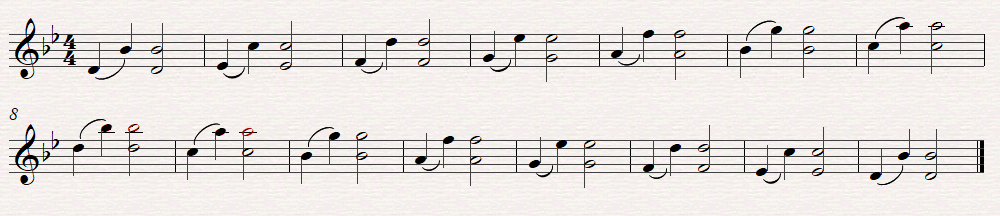
Ladies in Lavender
- Leave enough bow to complete the slur in bar 4 into the start of bar 5.
- Be really aware of the tuning on the first page.
- Practise bar 33 in overlapping blocks of 6.
- Practise your leaps from the first note of bar 33 to the next note, and likewise bar 34.
- Try to memorise the trickiest bits, ie. these two bars.
- Add a bit of squeeze from your index finger on the bow to help keep the scrubbing in bar 34 strong. Gradually lengthen the bow as you slow down, to help you get to the heel for the start of 35.
- From 35, careful with the tuning of the D. Practise the first phrase here down an octave to familiarise yourself with the melody.
- Practise sliding your fingers all the way up the fingerboard, sliding the thumb around under the top lip of the violin body.
Mon 16th Nov 2020
Scales
- Practise diminished 7ths with your eyes shut for tuning.
- When embarking on a dim or dom 7th, make sure you’ve got a definite major/minor 3rd to start.
- Dominant 7th in F is in 2nd position. Maybe write this on your scales list? The last two notes are in 1st position, so just reach back a semitone with your 1st finger.
- Show some love to your dominant 7ths this week! 😄
- I’ll post up the fingering for B flat major here a bit later.
Ladies in Lavender
- Tune the first two notes and check left thumb is comfy.
- If you’re having an off day with settling the tuning, play a slow 2 8ve D major scale in 3rd position.
- Check last week’s notes for practise techniques for the top two lines of the second page.
- Practise the second half of 34 slowly with separate notes. Remember it is an arpeggio and a dominant 7th.
- From 35, keep your bow confident.
- Careful of tuning in 37.
- Practise bars 37 and 38 by replacing the D in 38 with a G til you think you’ve got the top A in your head.At bar 41, try to return to the calm feeling you had at the start.
- Plan your bow distribution to get the right tone bars 50-53.
- Practise b. 56 with the ghost note, which you’ll shift to with your 1st finger.
Mon 9th Nov 2020
Scales
- Practise your C diminished 7th slowly with long strong bows and plan where the next note will be whilst playing the previous one.
- Chromatics – listen for the intonation of the 1st finger shift.
- Play them at a flowing speed to keep track of where the tonics are and see if you can find a way of sustaining the key note whilst you play, either on the piano or on your phone. You could even hum it!
- The fingering for B flat chrom is 2234 on the G string.
- The fingering for C chrom is 34 on the G string and 12121234 on the E string.
Ladies in Lavender
- The first page is sounding great! To make it even better:
- flow right from the beginning
- focus on the singing tone and smoothness of line
- careful of the tuning in bars 16-19
- count carefully on the last line of the page.
- Practise the shift in bar 32 by playing A(2) E(0) then A(2) E(1)
- From 30, let the quavers lead into the long notes without hesitation.
- Practise the first 2 notes of 33 a few times to get the G# in your head.
- Build up the scale from the G# one note at a time each practice. Remember:
- Keep good bow contact with the string;
- No sketching!
- Don’t move onto the next note til you know you are hesitation free and solid with your intonation;
- Start from scratch each practice.
- Once you’ve built the whole scale, focus on the first of each half beat as rhythmic landmarks.
Mon 2nd Nov 2020
Scales
- Diminished 7ths – Focus on just two octaves of G. In both G and B flat, careful of the D flat on the A string. Always keep the tone and a half gap in mind. In the C diminished 7th especially, think about how each string’s fingers can help you find those on the next string.
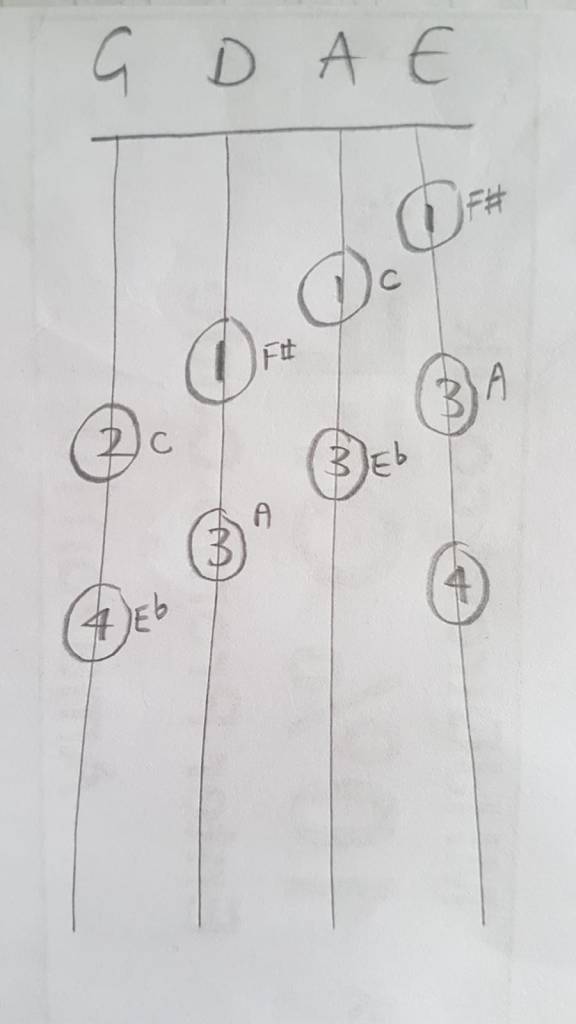
- Dominant 7ths – Watch the tuning of the sevenths. In E flat, left elbow swing to help with 4th finger tuning. Finish the last two notes of the one in F in 1st position.
- Chromatic scales – a little faster to help them flow. When playing separate bows, keep the bows small and bow changes smooth.
Ladies in Lavender
- Focus on the dolce sound quality – not too much bow, closer to the finger board and imagine the sound you’d like from your vibrato.
- Check the metronome mark and aim for this on the first page – it can flow a bit more now that you’ve got to grip with the rhythms.
- Lead with the bow (so don’t let shifts and string crossings disturb the smooth lines).
Mon 19th Oct 2020
Scales
- In Dominant 7ths, think about which fingers are opposite over the string and which are a semitone down/up.
- Think about your top note so as to play whether scales start in 1st position or not.
- Work on tuning carefully in Diminished 7th on G, then use that work to transfer directly onto the one on B flat, as they share most of the same notes!
- In your chromatics, careful not to squeeze your fingers too close together.
Sicilienne
- Aim to keep a consistent quaver pulse. I think the whole thing could be a bit faster.
- Find a rubber and get rid of the slide line you wrote on the first note of bar 16!
- Practise problem bars by adding a note at a time and only move onto the next note when you’re feeling completely comfortable. Keeping the rhythm secure in this exercise is particularly important, especially when string crossings happen, and at bar lines.
Mon 12th Oct 2020
Scales
- For G Major, play up to the top and then spend a little while going down and up just the top octave before descending all the way.
- When your new book arrives, start looking at the Grade 6 scales listed inside the cover.
Sicilienne
- Smooth bowing, especially when changing at the heel.
- Focus on tuning, perhaps with a 4th position 2 octave E flat major scale warm-up.
- Think a bit more about dynamics.
- Relax the dotted rhythm figure.
Eliza Aria
- Set up your tuner to check Cs, perhaps by pausing on one every two bars. Be especially careful if they are coming from a 4th finger E (they tend to be in tune if you’re coming from open A).
- At the start, staccato quavers but wall-to-wall sound on the crotchets, avoiding leaning on them too much though.
Mon 5th Oct 2020
Fiocco
- Try for even more concise movements in string crossings – just nod your hand, rather than committing the whole elbow, as you would if you were only visiting the next string for one note.
- Count carefully when you have crotchets, e.g. from line 5 in the 3rd bar (make sure you feel the 3rd beat) and from the last bar of the page (make sure you feel the 1st beat).
- Keep checking to make sure your tuning is low enough.
- To warm up your bow arm for the middle section, pick a note (E maybe?) and play two semiquavers and a quaver several times, thinking “Flora Moys” as you play it.
Sicilienne
Watch this video to get used to the lilting feeling before you practise this piece.
- The main rhythmic fix is playing the last quaver in the bar a little longer.
Mon 28th Sep 2020
Scales
- Practise slowly for tuning, then check 80 with the metronome. Always try to imagine the sound of the next note to help with tuning, especially when practicing the diminished 7th slowly.
Andaluza
- Your last week on this! Check over last week’s comments again as I think I managed to explain some of them more clearly this week!
- In the opening melody, flow more in the slurred semiquavers and sit on the longer notes a bit more as a way to catch your breath!
- In places like b.5 and b.53, closer to the heel, more punchy and try not to take the bow off the string.
You could start looking at B3
Fiocco
- A bit lower in the bow.
- Try to use small, concise bows and minimise movement on string crossings.
- Use open strings to check tuning – things were heading a bit sharp at times.
- Try to incorporate the dynamics – the earlier we add them to a piece, the more integral they feel.
- Practise tricky passages in dotted rhythms.
Mon 21st Sep 2020
Scales
- Grade 5 suggested scale speed is crotchet=80. Add G minors too – in melodic, map out your first octave’s finger placement before you start (esp. E and F#!).
- Dim 7th – try to keep the whole thing at the same speed.
Andaluza
- E minor warm-up – use a tuner to check the top 3 notes of the scale.
- Remember that working with a metronome should help you feel more in control, not less! So if you are panicking, try a slower speed.
- For the first page, play the metronome before you start and really listen to it, imagining the melody and internalising the beat. You can then turn it off.
- From bar 20, feel the heaviness of the crotchets to help you hold them long enough.
- Practise the Andantino section with the metronome. Place the bow on the string and count along with the metronome before you start – there’s no hurry, so start when you’re completely ready.
- Careful of the G#s at the end of 44 and 45.
Fiocco
- Warm up with a 2 octave G Major arpeggio.
- Listen carefully for the tuning of your 1st and 2nd fingers.
- In the middle section (the bit after the coda sign), start by practising it without the mordents. Then play it slowly with the mordents, trying not to let them disturb the rhythm of the semiquavers.
Mon 14th Sep 2020
Scales
- Practise the shifts before you play the scales as a pre-warm-up, esp. in G major;
- In E minor, when in 4th position, check tuning of 1st fingers with open strings;
- G dim 7 – Start with 2 8ves to get the notes in your head. Then when shifting, imagine the notes before you play them. Playing it slowly will help give you time for this whilst keeping things rhythmic.
Andaluza
- Practise this for tuning, plus 1 8ve higher:

- Practise with a metronome. You’ll notice your semiquavers can relax a little but that long notes need counting carefully so as not to become too long!
Mon 7th Sep 2020
G Major scale – left elbow swing to help with 4th finger tuning on the way down.
Add G diminished 7th to your scale practice. Maybe start with one octave on your first day, then add the second octave when that’s solid, then the third.
Andaluza
- Two semiquavers at the start of a bar (e.g. b. 5 and 8) should lead into the next note.
- Remember to keep counting! This will help you hold long notes for long enough (e.g. bar 9) and help with the rhythm from bar 20.
- Playing the semiquavers at the end of page 1 slower will calm down the pulse ready for the Andantino section.
- Practise from b.32 carefully to centre the tuning – think more about the spacing between notes in places of uncertainty.
- From b.4, observe the dynamics well but careful not to slow down too soon. Don’t forget the a tempo in the 1st time bar.
I’ll send you Fiocco’s Allegro now!
Wed 19th Jul 2017
Your first lesson with me! 😄🎻
 EcoNotes