
Welcome to your lesson notes page Vicky!

2026 goals
Technique: practice vibrato more systematically, warming up with the exercises
Get more comfortable with your bow hold.
Get to know 4th position better
Thu 19th March 2026
Stringbuilder p.12
Stringbuilder p.12
- 35. Keep playing the last exercise, singing the notes first.
- 36. Focus now on what you’re hearing, as the tuning could be much better. Use your tuner to help, and play it slowly with a relaxed bow.
- 38. Make sure your ghost note is an A natural.
- 39. Dear Katherine – be very careful with how you set up the tuning of the first 3 notes, as it’s very noticeable when you come down to the open A in bar 3!
Stringbuilder p.13
- Start looking at these by yourself, and be as meticulous as I am!
Handel Allegro
- Careful that your F naturals are low enough, and the other E string notes are high enough.
- For the string crossings in 11 and 12, practice in double stops, first in guitar mode to make sure your hand is relaxed and you can see the intervals, then still without the bow under your chin, then with the bow.
- Work in particular on spacing and tuning in 13, 17 and 20. Always be thinking about the intervals over the string.
- Rotating your left hand a bit more from the shoulder should help with reaching the intervals (eg. in bars 20 and 21).
- Make sure all your string crossing has the bowing the right way around, to make life easier!
Fri 13th February 2026
Stringbuilder p.12
- 35. Solfège it! The shifts down are much smaller than you think.
- 36. Make sure the ghost notes are all there, especially on the way down. Keep fingers on in the bars with no shift.
- 37. Use a tuner for this, and play it VERY SLOWLY. The B natural needs to be super high, tucked behind the 2nd finger.
Handel Allegro
- Warm up with F major (starting in 5th position). Use a tuner to find the F with your 2nd finger, then the B flat with your 1st finger on the D string. The you’ll know your hand is in the right place to play comfortably.
- In the Handel, keep the quavers short.
- Keep the F naturals on the E string low.
- From bar 9, tune the chords in double stops (as it suggests at the bottom of the page).
Hotteterre Allemande
- Check on YouTube for general Allemande tempi!
Thu 22nd January 2026
Stringbuilder
- 32 – try to relax your bow, so that you can easily do the bowings.
- 33 – be much more fastidious about the spacing between your fingers, especially on the middle exercise.
- 34 – Remember to think about the mechanics of each of your shifts, and make sure you’re not just jumping to 3rd position.
- Look at p.12.
Berceuse
- Warm up with D major scale and arpeggio.
- Your sound at the start is lovely! The only two notes that don’t match are at the end of bar 4.
- In bar 5, careful not to waste bow as you shift. In any 6-note slur, just let gravity lead your down bow.
- Practice rocking back and forth between the A and the harmonic. Use a straighter, lighter finger for the harmonic, and make sure your thumb is in 3rd position.
- Work on your tuning in bar 16 (bringing your 1st finger up).
- If you still find yourself running out for bow, work backwards and find out where you’re not quite getting to the heel.
Thu 18th December 2025
Happy Christmas!!
Thu 13th November 2025
Stringbuilder
- N. 31 – In this type of exercise, make the ghost notes longer so you can really hear them. Making sure your bow is running at a consistent level will help with hearing clearly too. If your top note of the shift isn’t in tune, work out whether the shift was the wrong distance, or if the interval between 1st and 2nd fingers is too small. You could try alternating between the top two notes to check this, and even the bottom two notes once you’ve shifted back down.
- N. 32 – warm up with the most in-tune C major scale you can manage! Place your fingers for the first 4 notes of G major before you begin. Practice the first 6 notes on a loop, with a relaxed left hand, to make sure all your 4th fingers match. Practice bars 5-8 to make sure all your Cs match. Use a tuner to help.
- N. 33 – use a tuner for this one as the notes are a bit funky! Lead by knowledge of the interval rather than what you’re expecting to hear!
- N. 34 – aim for a lovely sound from your bow, and start moving your hand sooner for each shift. Again keep your bow level as you shift.
- Have a look at p. 12 for next time.
Berceuse
- Let the singing version in your head stay strong as you start play.
- Use your bow carefully so you don’t run out of bow for the whole-bar slurs.
- In your 2nd bar, listen to make sure the two quavers are still in the right mood (less bow).
- Look out for the hairpins, and plan how to manage your bow speed accordingly.
Thu 18th September 2025
Each time you play a scale, use your tuner and listen for pure tuning.
To a Wild Rose
- Think about how you’re using your bow – is it evoking the right mood for the piece? Keep bow changes nice and smooth, especially if you’re disturbing a printed slur.
- Not too high on the D in bar 1 and the G in bar 3. Playing bar 3 with a tuner several times would really help.
- Keep listening for tuning throughout, and thinking about tones and semitones.
- Get to know where you need to save your bow.
Stringbuilder
- N. 26 – keep practising this one for tuning.
- N.28 – watch the bowing, and make sure you don’t crunch the bow as you shift. Be really strict with the naturals vs. sharps in this one! As always, make sure you know how far you’re shifting.
- N. 29 – embrace the weird fingerings by making each shift as smooth as possible.
- Explore page 11 on your own.
Thu 4th September 2025
Stringbuilder
- Start by playing C major scale and arpeggio in 2nd position, focussing on a consistent hand shape and intonation.
- 24. Start with a really relaxed right arm. Work on the spacing between the G and E, bars 1-2. Be clear in your rests. Use your 3rd finger to help you get from the end of line 2 to line 3.
- 25. Try to keep your fingers on the string in the odd-numbered bars. Let the slides be audible in the even bars.
- 26. Warm up with F major in 5th position (starting on your 2nd finger). Be strict on tuning in this, especially low 1st fingers.
- 27. Try to be exact with the placement of your 4th fingers at the end of each odd-numbered bar. Shift very slowly, and make sure your thumb moves too (think of it as the car that takes the fingers to the new position).
- 27a. Be exact with the intervals in bars 1 and 2. Try to keep your hand shape grounded and consistent in these bars too, resting the fingertips on the string.
Here Comes the Sun
- Watch out for the G#.
- In the syncopations, try to keep your arm moving at the same speed for all the crotchets.
Thu 17th July 2025
Stringbuilder
- Generally, watch that you don’t shift too high for 3rd position – your wrist should only gently touch the shoulder of the violin, if at all.
- No. 19: keep playing this for the intonation of the C and F naturals – set up a tuner to check.
- N. 20 : Start moving your hand for shifts as early as possible. Keep an eye on the bowing, and use the middle of the bow in the first section. Try to use the whole bow in the second half.
- N. 21: Really feel the tones and semitones in this, using your 2nd finger as a marker. Make sure all Gs in the first 4 bars are in tune (and equivalents further on). I would occasionally practice this with a tuner too.
- Keep going on this double page spread.
Fauré Berceuse
- Use the bow lightly and sparingly, especially when you shift down with your left hand.
- Spend some detailed practice time on the tuning of the 6th line.
Thu 26th June 2025
Stringbuilder
- No. 17: Remember not to land so heavily on the shoulder of the violin when you shift to 3rd position.
- No. 18: Careful of your E natural F natural tuning. Work on a clean string crossing under the slur in the penultimate bar. Let your bow “sail above the clouds” – keep it light and flowing.
- No. 19: Build your fingers up from the 1st finger before you start. Keep all C naturals and F naturals super low. Look ahead so you see the shifts coming, and can plan calmly for them.
York Bowen – Melody
- Look ahead as you get used to the fingering.
- For any particularly tricky shifts, play them in 1st position to hear what they should sound like.
- Try to keep your bow flowing and light as you work on your left hand logistics.
Thu 6th February 2025
Stringbuilder
- General point – listen for clarity of the first note after a string crossing.
- Warm up for p. 6 with the C major scale pattern at the top of the page.
- In 14, start by playing A B C D E, to get all your fingers in the right spots. Work on adding the dynamics.
- In 15, concentrate on a smooth bow. You could do some long, slow bows before you start, noticing your bow hold (esp. pinkie) and keeping your bow arm relaxed. Use tiny bows for the first 2 notes. See how smooth you can make your bow on string crossings.
Air Polonais
- Watch your bow in bar 49 to check it’s not wandering all over the string.
- Practice 72-79 very slowly so that everything can stay relaxed. Make sure the Bs, A#s and As are super in tune.
Thu 23rd January 2025
Stringbuilder
- General point for 3rd position – check the tuning of your 2nd fingers, as they might feel closer than in 1st position.
- No.10 – How smooth can your bow be? Try to keep it moving on a smooth track, and listen especially for a smooth sound on bow changes and string crossings.
- No.10 – Think “lazy fingers” – let them rest on the string, and only lift them to move string.
- No.11 – be meticulous about the tuning of your semitones.
- No.12 – in bar 7, use open Es, but make sure they sound melodically related to the next few notes.
- No.13 – focus on tuning throughout.
- No.13 – Create the right mood at the start by using small bows with low-energy bow changes. Think about how you will use your bow differently in the 2nd section.
Air Polonais
- For the string crossing passages, set your arm in the right position for the higher string and nod your wrist to get the right position for the down bow on the lower string.
Thu 9th January 2025
Stringbuilder
- Work on p.4 of Stringbuilder.
- Check that your bow hold is curved and flexible before you start each exercise.
- Aim for a singing tone in the one-liners.
- For bar 1, feel free to use a ghost note (A) to help you shift.
- Think about the size of the intervals before you play them.
- Have a tuner set up beside you for the odd check now and then.
- In no. 7, work on unifying the tone as much as possible as you change string.
- In no. 8, try to keep your bow smooth so that your tone is consistent.
- Home on the Range: At each new dynamic, think about the character and tone you would like. Think about how to use your bow to achieve that.
- Work on getting the bowings more comfortable, thinking about bow distribution.
Air Polonais
- For the tricky bit, use less bow and check your B and D tuning before you start.
- Practice from the bar before the double stop bar, and turn the double stop bar into semiquavers (F# C G B G B G B).
- Start the whole piece with flat bow hair and a nice curved bow hold.
- Keep the bowing as simple as it is on the page!
- Make sure you’re not shifting too high for the E in your 2nd bar.
Thu 12th December 2024
From the book we used today, learn Corelli Sarabanda and Air Polonais.
Fri 18th October 2024
Galamian Scale in One Position
- Always use your 4th fingers in this.
- Use the open strings to re-calibrate your tuning if you ever get stuck.
- Remember to always take your left thumb with you as you shift.
- On line 2, make sure your F natural finger placement happens in good time.
- As you change string, make sure your bow angle is precise.
- Watch your 3rd finger and see if you can stop it collapsing – the left elbow can help with this.
Hindu Song
- From bar 14, keep your bow hand light so that it responds when you tell it to change!
- Keep counting – a metronome will help!
- Work on making the dynamics more intentional.
Chédeville Allegro mnp
- Lovely articulation in bars 1 and 2 – make sure your 3rd and 4th bar are just as neat.
- Practice bar 5 without the Gs to get used to the bowing. Try to stay in the upper half of the bow, and flick your down bows quickly and lightly.
- Your F#s need to be nice and high there too.
- In bar 10, try to keep your 1st and 3rd fingers on. Similarly in bar 11, keep your 2nd finger on.
- From 29, focus on where your bow is in relation to the bridge, to help improve the sound quality.
- In bar 42, be aware of your bow so that the trill note isn’t too long.
Tue 24th September 2024
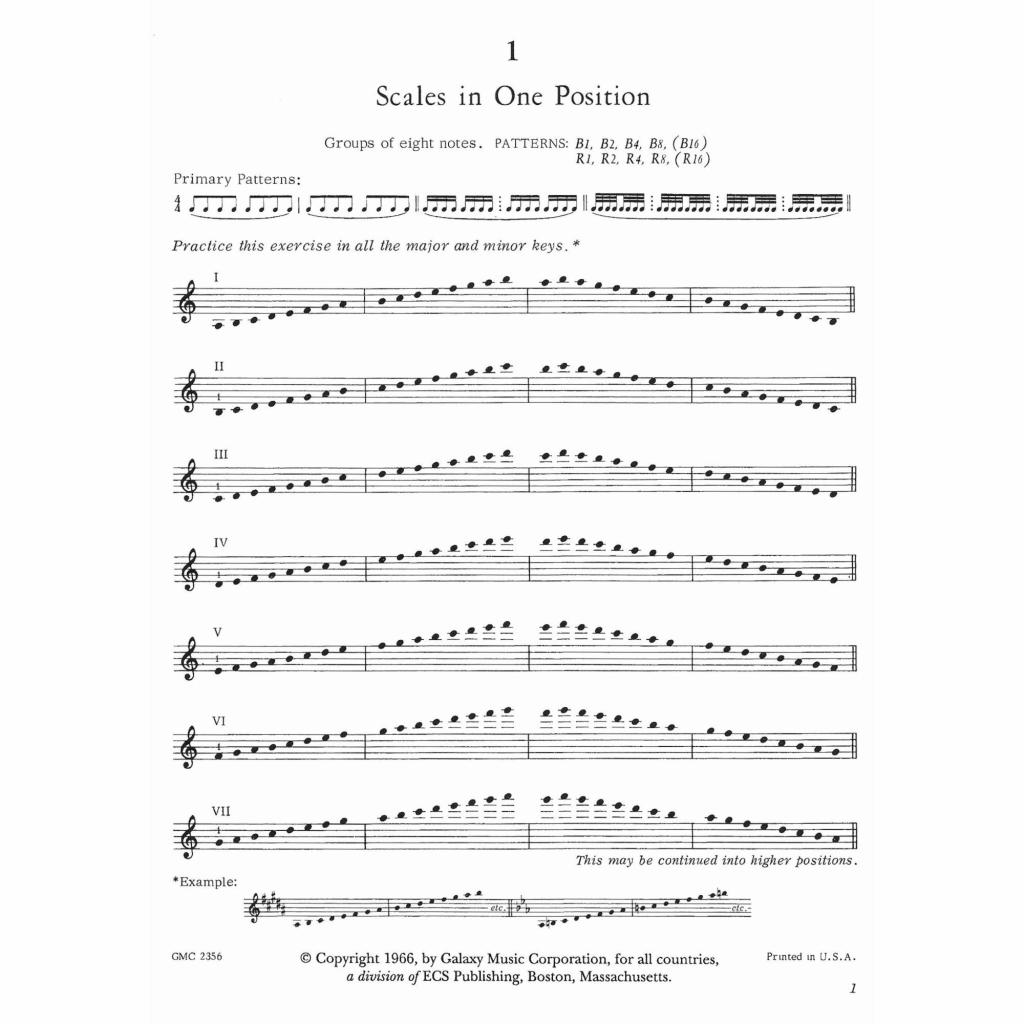
- Slur this in 4s, keeping the bow really smooth.
- Definitely go up to 4th position, but go further if you’re feeling intrepid!
Stringbuilder book
- N.4 – keep going with this, focusing on tuning a bit more now. Don’t rush this exercise – this helps with working on sound quality.
- N.5 – practice this (especially the 2nd line) with a tuner. If a note is out of tune, return to the previous note and aim to place the finger correctly first time, rather than moving it around lots. Check in with your ears every now and then to make sure you’re not just relying on looking at the tuner.
- N.6 – don’t forget to get your fingers set up before you start, and leave them there ready for bar 1. The first finger should feel like the anchor of the hand. In bar 7, try not to land on the open E too heavily!
- Look ahead to page 4.
Hindu Song
- Start at the tip.
- How calm can you make it sound, especially in bars 10 and 11?
- I think you can still be further from the bridge at the start (make sure you stay there too!).
- Make sure you slur bars 16 and 20.
- At bar 18, focus on both the 1st and 2nd fingers being anchors.
- Work on the C natural’s tuning in bar 22.
- Once you’re more confident about the notes, go back through with a fine toothcomb for rhythm.
Look at Chédeville Allegro mnp for next time.
Tue 10th September 2024
I’ll send you the music for the Scale in One Position. Try to keep your fingers down on the string as much as possible, not by clamping down but by making the fingers heavy and lazy. Keep the tempo slow so that you can focus on sound quality and intonation. Go up as far as you feel comfortable.
Stringbuilder book
- N.4 – follow the tips on the page.
- N.5 – practice this with a tuner set up next to you to make sure the gaps aren’t too wide. Keep your bow light – always think about sound quality.
- N.6 – focus on tuning and sound quality in this, and remember to look ahead. Feel free to speed it up if you feel ready.
Hindu Song
- Careful not to play too close to the bridge – we want a calm, singing sound quality.
- From bar 14- 45, analyse the tones and semitones in each 4-bar phrase to get your fingers organised. Which fingers can stay down from one bar to the next?
- Work on the bowing separately from the notes for bars 14-17.
- Be really careful of your rhythm whenever you have tied notes.
Choose whether you’d like to work on the Chédeville Allegro mnp or the Corelli Preludio in your Encore book.
Thu 4th July 2024
Valse Lente
- Make interval awareness and intonation your main goal this week.
- In bar 49, see if you can match the tuning of your Bs at the end of the bar.
- Spend some good time on the tuning and light bowing of 53-55. Try to blend the C# into the soundworld of the other up-bow quavers.
- How smooth can your bow changes be from bar 56? Don’t use too much bow before the crescendo.
- Practice the last 2 bars, and aim for 2 and 2 on the 4 note chord. Once you’re used to that, you can smooth the movement between the double stops.
Baklanova Romance
Air de Ballet
Thu 20th June 2024
Baklanova Romance
- Warm up for this by sliding your hand up and down the neck and then resting on each finger in turn with some vibrato exercises.
- Next, find your starting notes for the first 4 bars. Try a variety of finding the harmonic with your 4th finger to start (but always make sure you place the other fingers afterwards too) or by doing a 1st finger shifting exercise from B flat to E, then building the fingers up from there.
- When adding vibrato, always imagine a whole hand vibrato, which just happens to have certain fingers down at certain times.
Air de Ballet
- Warm up with C major in 2nd position, remembering to swing your elbow as you change string.
- Prepare for your first 3 notes before you start. Be ready to move your 1st finger for your B naturals on the A string.
- Listen to the tuning in the new fingering section from 13. Again, can your left elbow help with this?
- Work on how you use your bow in the crescendo and f around bar 25. Aim for more arm weight, not pressure.
- Watch the tuning of all B naturals and C naturals. 36 is a particular one to look out for.
Valse Lente
- Don’t forget to retake after the harmonics – this will be easier if you use less bow on the crotchet before and avoid getting to the tip.
- Work in detail on bar 11 like we did in the lesson.
Thu 23rd May 2024
Baklanova Romance
- Revisit this to help you get more comfortable in 4th position.
- Always be listening for sound quality as you go.
Air de Ballet
- Warm up with a C major scale.
- In the piece, work on the contrast between repeated down bows and the smooth melody sections like bar 5.
Valse Lente
- Count yourself in for a few bars before you start playing.
- Take a little retake after each harmonic – imagine some floaty dresses! Practice this by playing the notes in the brackets.
- Practice the upbeat to bar 11 a few times to get really used to the A# and slur.
- Practice 13-16 for ease of bowing.
Thu 10th May 2024
Start with some bowing exercises to help your right wrist position:
- Hold the bow slightly in front of you and turn your wrist from side to side, making a sand angel with your bow.
- Starting at the tip, play long notes on each string and try to keep your watch face facing you, rather than the ceiling.
Study in C
- Warm up with a C major scale, perhaps using a tuner to check some of the notes in the upper octave.
- You’re currently at crotchet = 60 – use a metronome to work this speed up gradually, always listening carefully for tuning as you go. (Fs need to be lower in general).
- In the bowing variation with slurred pairs, try to use less bow and change quicker.
- In the whole bar slurs, see if you can lighten the bow up a bit and distribute the bow evenly (maybe using some kind of bow marker?).
- In the 2-slurred, 2-separate bowing, use less bow on the separate ones.
- In the 3-slurred, 1-separate version, use less bow on the slur and try not to slow down for string crossings (anticipate them with your bow arm).
- For the semis and demis, think of the word “piccadilly”.
Study in G
- Keep the Cs nice and low.
- Keep the bow light.
- If you hear a double note, adjust your right arm up or down.
- If you try the slurs, start with 4s, then 8s, then 2s.
Allegro ma non presto
- Keep the quavers light, but with a slightly zoomy bow. There should be a little gap every time you have an octave leap.
- Try the bowing from bar 5 with open strings first, mainly in the upper half and trying not to travel down the bow.
- When practising from bar 5, get the bow happy first with some open strings. Once you put the fingers back in, try to have your G# ready first.
Thu 25th April 2024
Eta Cohen book
- Warm up with a slow C major scale, eyes closed, to really listen for tuning. Make sure your left thumb is positioned opposite your 1st finger and your hand shape stays consistent.
- N. 2 – once you’re used to the notes, start using the bowing variayions.
- N. 4 – start up bow, use the upper half and use small bows. As a warm-up, play the open D and A together for a bar’s worth of quavers. Then start nodding your wrist in favour of the A string on the up bows and the D string on the down bows.
Valse Lente
- Start in the middle of the bow.
- Practice bar 19 slowly so that the ghost note is intact.
- Keep the G naturals at 30 really low.
- Practice bar 31 slowly with the ghost note too, trying to keep the 2nd finger on the string (or at least hovering very close so you don’t lose its place).
- Careful any time you’re on the E string that you keep the bow flowing, so as not to crunch.
- In 53-56, try to keep your fingers grounded (keeping lower fingers on when you place higher fingers).
- Can you make 55’s bowing sound the same as 53’s?
Allegro ma non Presto
- Practice the bowing for bar 5 using open A and D (semiquaver – dotted quaver), then progress to AEDE semiquavers. Use the upper half of the bow and use a fast, light down bow and a slower up bow.
Thu 11th April 2024
MTB Grade 4 Distinction! 🏆🎻
Mon 25th March 2024
Reading Skills
- Find the link to practice these with.
Scales
- Choose which scales you’d like to play slurred and which you’d like to do separate.
- For the separate bow scales, use less bow.
- Make sure B major starts high enough!
- In E major, try to keep the bow nice and smooth on the higher strings.
- In F minor, see if you can bring your left thumb a bit further up the neck as you shift. Make sure it definitely sounds minor!
- Your chromatic scale was wonderful!
- Slur the dominant 7th.
- In the arpeggios, be really picky about the tuning of the 2nd note in each octave.
Technical exercises
- Ex. 1 – Put a marker in the middle of your bow to help with bow distribution and keep the low 2nd fingers low for the whole bar.
- Ex. 2 – Fab!
- Ex. 3 – practice the last few bars a fair bit – the angle for the last bar isn’t as different as you think!
Ostinato
- For the harmonic in bar 24, make sure your hand is low enough (low F natural) and stop the bow dead on the string after the last quaver before the harmonic (like an ice skater’s tiptoe stop).
- Keep the bow straight as you change bow in bars 43.
- Just spend a bit of slow time on the penultimate bar for finger spacing.
Mon 18th March 2024
Allegro Moderato
- Convince your 4th finger not to be lazy in bar 2!
- Every time you have a quaver rest followed by an upbeat, try to keep the bow on the string ready for the next section.
- Practising from 49, keep trying different combinations of rhythms and small chunks. When you’re running sections, try to keep moving through 51 and 52, and don’t use too much bow in 53 and 54.
- Place the last note.
Rieding Allegro
- Do a 1st and 2nd finger warm-up on each string, making sure the 1st finger is high enough and the 2nd is low enough.
- Think of a swinging banana boat at the start of bars like 8.
- Check your tuning in bar 26-7.
- Practice 37-44 in 4-note chunks, thinking ahead between each one and noticing any upcoming patterns. Think lots about the sound quality as you do this, and in particular notice if any string crossings are a bit scrappy.
- Do some open string practice for bar 43, making the string crossing by dipping the elbow itself, not dipping from the elbow. Keep the angle as small as possible.
- Work on getting the start of each 2- or 4-bar phrase really clean (good bow control).
Mon 19th February 2024
Rieding Allegro
- Practice bar 19 with the double stop like we did in the lesson. This should help with a smooth string crossing. Aim to avoid the sound of the open string as you take the finger off.
Ostinato
- Make sure your bow hold feels secure before you start.
- Try bar 20 with the alternative fingering.
Mon 29th January 2024
Allegro Moderato
- Practice bars 7-8 with open strings and try to get the up bow string crossings really neat – you may need to aim for the string crossing a whole semiquaver earlier!
- See if you can get a little more release on your quavers in places like the opening phrase.
- Try out the new dynamics and let me know how you think they sound!
Rieding Allegro
- Practise bars 21-36 for intonation and for a singing tone.
- For the louder dynamics, make sure your bow is staying straight and that you’re using flat bow hair.
- Keep listening out for clean string crossings.
- The clarity of the last 2 notes of 36 will have a big impact on the following passage.
- Practice 37-44 open strings trying to keep the bow straight and using slightly less bow.
Ostinato in the Key of Jazz
- Remember to start just below the middle of the bow.
- For the G# accent at the start, go for more of a highlight than an accent, by swooshing the bow instead of squeezing the sound.
- On the Ds in 15-17, make sure your bow is only getting the A string.
- In 38, make sure the change from triplets to semis is instant, not gradual. Experiment with a little gap between these two bars to steady you.
- Play it with the metronome a bit – don’t feel you need to rush.
- In each rest, think about where your bow needs to be to start the next phrase.
- Deconstruct the last 2 bars and play each beat separately. Once they’re all clean, play 2 beats together, then 3, then 4 etc.
Mon 15th January 2024
Scales
- Aim for clarity on every note, starting from the very beginning.
- Don’t be in a hurry – you need to be able to hear everything clearly.
- Try not to add any impromptu open strings as you change string.
Technical exercises
- Try doing 1 per practice session, so that you give yourself enough time to think about them carefully.
- Ex.1 – don’t start until you know your first note is in tune.
- Ex.1 – careful not to press with the bow, especially near the tip.
- Ex.2 – teeny weeny thing – hold the last right to the end of beat 4.
- Ex.3 – start with the recorder stretch and work with a tuner.
Allegro Moderato
- Start with the places you want to troubleshoot.
- Practice 51-52 the way we did in the lesson, first in crotchets, then in pairs of semiquavers and dotted quavers, then 2 semiquavers and a quaver, then all 4 notes.
- Go back to practising 53-56 as open strings. Use small strokes in the middle of the bow and try to get your right elbow in a place where you can effortlessly reach both strings.
- Make sure each quaver upbeat starts with your bow on the string fractionally before you play.
Allegro
- Work on making the dynamics more pronounced.
Ostinato in the Key of Jazz
- In bar 3, aim for me to tell you the G# is too high!
- Focus on your bow – how straight is it? Is it straying too close to the bridge?
- The more complicated the fingers, the more likely it is that your bow is hindering you.
- Practice 13-14 for bow clarity and rhythm.
Mon 13th November 2023
Scales
- Start your scale practice by loosening up your bow hold so that you have a good shock absorber ready for the first octave.
- Make sure you always know where your first string crossing will come before you start – especially in F major.
- In the separate bow scales, eliminate any drag on the first note – start in the middle where you will be playing the whole scale.
- Work on the movement of your 2nd finger in the dominant seventh.
- For the E major arpeggio, practice you shift by sliding between B and E. If you don’t make the E shift, stop and try again. Do the equivalent in F minor too.
Practice your technical exercises! 😁
Allegro Moderato
- Work on the tuning of your 4th finger in bar 2.
- In bar 54, reset your hand for each high E.
Allegro
- At the end of bar 6, practice the “skateboarder’s landing” with a light bow hand.
- In bar 22, keep hold of your 1st finger as you open the hand out for the A.
Wed 1st November 2023
Scales
- Warm up by playing a minim on each open string, focusing on how flowing your bow arm is.
- For the scales, play the first half-bar on a loop with a retake before you start, focusing on tuning, a relaxed left hand and the tone.
- Try to keep the bow smooth as you shift.
- Keeping both hands relaxed, play F minor with a tuner and check the E natural especially.
- Practice the arpeggios with open strings to get the bow neat and tidy – use less bow, in the middle.
- In the B major arpeggio, remember to shift properly from half position up to a high 1st position for th 3rd note.
- In the E major arpeggio, check your 2nd E with your open E string.
Allegro moderato
- In the tenuto quavers at the start, try not to control the end of the note. Use the upper half of the bow.
- In bars 9-12, listen out for the tuning of any notes on the Es tring.
- From 27, again make sure the high notes aren’t too sharp.
Ostinato in the Key of Jazz
- Keep an eye on where you are in the bow – you could often benefit from being nearer the heel for anything other than the swung quavers.
- Practice the bowing of bar 21 on an open A string. You need a bit more resistance on the down bow and more whoosh on the up bow.
- For the last two bars, play just up umtil the first note of the shift lots of times.
Tue 26th September 2023
Scales
- Always make sure your thumb is comfortably in the right position before starting each scale.
- In C major, keep your 1st finger on as much as you can.
- Keep your bow moving smoothly in the chromatic scale.
- Spend some time seeing if B major arpeggio’s new fingering works for you.
Ostinato in the key of Jazz
- Practice a D major 1 octave scale in harmonics, always moving the hand as a unit (thinking of the thumb of course!).
- If this is tricky at first, start with the normal scale but with the 01110111 fingering.
Mon 17th July 2023
Technique focus: bow hold.
Ostinato in the Key of Jazz
- For bar 24, work on resting the bow still on the string in the rest so that the harmonic has an accented start. I think you’ve already done it lots, but just keep practising 23-24 over and over, assessing what you could change and what should stay the same each time. Once it’s started working, try to get it clean 5 times in a row.
Great job on your sight reading today!
Thu 22nd June 2023
Scales
- Keep your bow light and flowing.
- In the slurred version, as you shift, see how smooth your bow change can be.
- When playing with separate bows, you can still be thinking about these smooth bow changes.
- In F minor, make sure your first tone is big enough.
Technical Exercises
- Ex. 1 – in bar 4, check the tuning of your Cs and As, and in bar 7 work on the F natural at the end of the bar.
- Ex. 1 – keep the fingers moving fast, but go a little slower with your bow.
- Ex. 2 – work on the neatness of your string crossings between semiquaver groups.
- Ex. 3 – experiment with the fingering in bar 5, asking yourself which sounds more in tune and neater.
Allegro
- Work on the dynamic shaping of your first phrase, like we discussed in your lesson. Remember to start really lightly and keep the bow changes really smooth, especially when changing up onto the E string.
Allegro moderato
- 49-55: start with a calm brain and try to keep both hands soft. Try repeating each pair of notes as you calmly play this section through.
- Listen carefully to all your upbeats to make sure they are in the mood of what’s to come.
- Try the alternative fingering in bar 29.
Ostinato
- Practise this at about crotchet = 75 focusing entirely on tuning.
Thu 22nd June 2023
Duet
- Listen to see if you can make all the two-quaver groups really clear (eg. the start of bar 2)
Scales
- Spend some more time with your tuner as you practise your scales.
- Play these from memory now, listening for sound quality – especially on the string crossings.
- Learn your new fingerings for E major and F minor.
- Chromatic – space the notes out a little more on the E string.
- Dominant 7th – higher F#s and lower C naturals.
Ostinato
- Play through with expression and make a note of which dynamics you naturally do.
- In bar 23, try to get your 3rd fingertip squarely on both strings in the middle of the bar so that you don’t have to move it and you get a clear sound for the A.
- Start the harmonics with a bit more bite from the bow.
Mon 5th June 2023
Scales
- Free the sound with your bow arm.
- Try not to tilt your bow quite so much, and experiment with a bit less bow on the quavers.
- In C minor scale and arpeggio, check your starting note and all Fs and Cs with a tuner. It may help to play CFC before your start.
- In F minor, remember to let your thumb come underneath the neck of the violin as your elbow swings forward.
- In the chromatic scale, make sure your 2nd finger moves high enough.
- Dominant 7th: Aim a little lower on the C.
- Aim for higher D#s in the B major arpeggios.
- Practise the arpeggios with open strings first to get a good concentrated sound.
Technical exercises
- Ex. 1: Watch out for the tuning the 3rd finger on the A string near the end.
- Ex. 1: Loosen up with your bow now that you’re no longer apprehensive about trying to fit 12 notes into one bow! Don’t forget to use the bottom part of your bow.
- Ex. 2: Check the speed before you start.
- Ex. 3: just spend a little time with a tuner for your starting note and the F naturals.
Duet
- Make more of the accents.
Allegro
- From 37, aim higher on your Bs and lower on the Gs.
Allegro Moderato
- At bar 13, make sure you are using small bows and that the bow is straight.
- Try curving your 2nd finger in bar 50 (arm around).
Mon 22nd May 2023
Ostinato
- A reminder to make sure your hand shape stays pretty set as you shift.
- Tuning – do some spot checks with your tuner, trying to get certain notes in tune 5 times in a row. The first is the G# in bar 3. Try to keep your general hand position the same to help with consistency. Keep listening too to make sure you’re not skimming the A string. Be on the lookout for other notes to pick out throughout the piece.
- Use your 1st finger at the end of bar 21 as an reference to help you find the 4th finger at the start of the next bar.
- To practise the stopped harmonics, play a 1 octave D harmonic minor scale. For the harmonics to ring clearly, use this checklist:
- Bow confidently nearer the the bridge;
- Check your finger positioning (using stoppednotes if necessary);
- Heavy bottom finger, light top finger.
- In bar 44, spot-check the tuning of the G#.
- Play 46 several times to get used to the bowing.
- Put your 3rd and 1st fingers on the string ready at the start of bar 47.
Allegro Moderato
- Work on keeping one finger down as a tuning anchor for every bar from 49.
- Anywhere the bowing/string crossing sounds unclear, practise the bar in an open strings version first.
- Listen out for sound quality – a straight bow and using a little less bow, nearer the lower half will help.
- Work on the tuning of your octaves from the upbeat to 27 onwards.
Tue 9th May 2023
Technical exercises
- 1. Focus almost of your attention on a soft right hand.
- 3. Aim to move your hand on each bar line, but nowhere else.
- 3. Play closer to the middle and focus on a relaxed right shoulder.
Duet
- Try practising some two-finger pizzicato on one note and then see if it works for you on the quaver passages.
- Try a few times with a metronome to see if you’re speeding up anywhere.
Ostinato
- Check the tuning of the G at the end of 21.
- Careful of the rhythm in bar 40.
Tue 25th April 2023
Scales
- Set your tuner up before you start working on these.
- With all your scales, start by checking your 1st and 4th notes are in tune – this will get the hand in the right shape and position.
- B major – practise this with a tuner and check at least one note on each string.
- E major – play the first two notes a few times before starting, and listen for clean string crossings on your way back down.
- C melodic minor – check the tuner for your 1st fingers. Maybe start by checking C and F to get your hand in the right shape. It might help to think that you are sort of in 1.5 position for this scale!
- F minor – remember you have a visual marker for where to put your finger to start this one!
Rieding
- Be on the lookout for low 2nd fingers being low enough. Set this on the right tracks by being really intentional about 2nd finger placement in bars 6 and 7.
- Aim lower in 26 for the E.
- Remember accents don’t equal staccato.
- For bars 69 and 70, practise the top two notes as a double stop, keeping the 1st finger stable.
Ostinato in the Key of Jazz
- Try playing along with the backing track in headphones in your right ear.
- Lots of G#s sounded natural, so look out for them!.
- Practise bar 14 a few times, always starting by checking the G is in tune before you start. The 3rd note needs to be longer.
- 28 rhythm – a bit longer on the first A.
- Careful at 32 that you hold the minim for its full length and have some silence for the quaver rest.
- Work on 37 into 38 the way we did in the lesson.
- Work with a tuner on your last section and make sure you’ve thought about all the gaps between notes.
Tue 4th April 2023
Allegro Moderato
- Focus on adding more contrast between the f and p sections.
- In places like bar 9 especially, listen carefully for hitting any next-door strings.
- Aim nice and high with your C# at the start of 14.
- In your shift at the end of 28, think about moving up a tone.
- Try out the two possible fingerings for bar 29 slowly, and choose the most reliable one.
- Working from 49, make sure you have your F# and B in tune before you begin.
- Work on this section in rhythms, first elongating the first of each beam, then the second, etc. Each permutation will have its own technical hurdles! Don’t forget to keep listening for tuning.
Ostinato
- Have a few run-throughs with a metronome.
- Download the accompaniment track.
- Aim lower on your 2nd note.
- Don’t forget the retake at the end of bar 4!
- For the G# in bar, think of it like you’re shifting. You’ll almost definitely need to let go of the F natural with your 2nd finger. Bar 12 is exactly the same.
- To help find the low A in 12, use the 4th finger to help with the octave frame. You’ll need to let go of the 3rd finger though.
- Work on the timing of bar 14.
- In 19, use the 1st finger from the D to help you find the G in tune.
Tue 21st March 2023
Technical ex.1
- Start with some long relaxed bows on open G.
- Change as little as possible when you start adding fingers.
- Play a whole bar alternating Bs and Gs, then a whole bar of Cs and As etc. Focus on curved fingers, and on keeping the lower finger down as you lift and lower the upper finger. Keep the hand as relaxed as possible, with the left elbow further forward.
Scales
- F minor: to find the starting note, put a 2nd finger on a D, 4th finger on F, then replace with a 2.
- Keep your bow arm as relaxed as you can – this will mean you can react quicker if you need to change the angle.
- Practise it with your eyes closed so you’re listening for sound quality.
- Aim to have played the arpeggio by next lesson.
Ostinato in the key of Jazz
- Play some simple scales before you start so you can focus on relaxing your left thumb and chin.
- The feel for this piece is really coming along!
- Aim higher with your G#s in bars 3 and 9.
- Aim nice and low for the G natural at the end of 21 – remember it is directly opposite the D on beat 1.
- Play 23 and 24 by themselves quite a bit. Put the bow on the string just before you start the harmonic, then imagine the cat’s claw analogy to make a really clear start to the note.
- In your repeated up bows, keep your bow hand soft for these little up bow circles.
- In 38, make sure you’re keeping the beat the same – the semiquavers need to be faster. Practising 37-38 with just the bow a few times. Then graduate to playing 37 as written and bar 38 all as Fs. Once that all works well, play it as written.
- Practise from 41 for the harmonics in 43. Remember to bow close to the bridge for the harmonics, and to have normal pressure on your 1st finger and ghost pressure on your 4th finger.
- Aim for a super low F natural in last 2 bars. It might be worth practising 47 with a tuner a few times as you get used to the notes.
Mon 16th January 2023
Scales
- Use all of your bow for the slurred dominant 7th.
- Keep your bow flowing in all scales.
- Practise your minors without the music.
- In scales like C minor where you may lose the tuning of your tonic, use the piano to help you – sustain the key note with the pedal as you play.
- For F minor, play the notes on each string on a loop like we did in the lesson. Aim for curved left hand fingers, and try to twist your left arm as close to your shoulder blade as possible.
Vibrato
- Use your thumb in conjunction with the finger, adding a tiny bit of pressure to localise the movement.
Rieding
- Work on your metronome section first.
- When working on the tuning of Cs and C#s, check you always have some stability in your hand with an anchor finger (usually your 1st).
Mon 5th December 2022
Scales
- Check all your 1st notes with a tuner before setting off.
- Play the scales with a metronome set to crotchet = 50. You may even want to set it slower – the key is to have time to think ahead and keep a steady pulse.
- Set your first 3 fingers on the string before you start to get your hand in the right place.
- When playing high on the G string, swing your left elbow forwards to help reach the little finger.
- In C melodic minor, move your 2nd and 3rd fingers down a semitone as soon as you hit your top note.
- For F minor, start by practising the first octave in 1st position. Don’t move to 5th position until you’re really sure of your tuning.
- In the chromatic scale, check the B, C#, F# and G# with the tuner.
Ostinato in the key of Jazz
- Focus a bit more on the bowing, in terms of the ups and downs and in terms of where in the bow you’re playing.
- Be mindful of the tone-and-a-half gap between F natural and G#.
Tue 22nd November 2022
Ostinato in the key of Jazz
- Start your first three quavers roughly where you would start a down bow if you got rid of those notes. This idea applies in lots of other places in this piece too!
- Play the 2nd line much slower. Before you start, make friends with your stress ball or a small cuddly toy, squeezing and releasing with your left hand.
- In 24, make sure your bow has good contact with the string before you play the harmonic.
- Listen out for the tuning on all your F naturals.
- Remember that harmonics sound clearer closer to the bridge, and that you shouldn’t be depressing the string at all with your light finger.
Tue 8th November 2022
Scales
- In the higher scales, place your 2nd, 3rd and 4th fingers on the string before you start to get your hand and arm in the right place.
- Play the chromatic scale at quaver=60 and really hear how each note slots into its own place.
Technical exercises
- Start with your favourite!
- In ex. 3, relax your bow hand for a softer sound and try to keep your fingers on for each bar. Play each bar as a double stop, giving yourself lots of time between chords to move your fingers calmly.
- In ex. 1, tune your B natural to start. Try to eliminate any pressing in the bow. Start the whole thing by just playing the G string notes up and down under a slur, to get the sound you want with your bow and the tuning in your fingers. Playing it a tiny bit faster will give you more freedom with the bow.
Allegro Moderato
- Practice 7 and 8 in semiquaver groups with gaps in between. Aim for really small, neat bowing. Once that’s sounding clean, do two groups, then put it all back together.
- To tackle bar 49, start with open strings slurring a semiquaver A to a dotted quaver D. Don’t commit too much to the A string as this will slow you down. Then work on that section with a metronome set to quaver=60. Work your way up gradually, but only when the rhythms are even.
Tue 11th October 2022
Küchler
- In scaley passages, use the open strings.
- Watch out for tuning on your Gs on the E string – especially when coming down from a 4th finger.
- If you ever feel a passage needs a neater bow, practice it open strings. You might be using too much bow and you might not be preparing early enough for string crossings.
Tue 27th September 2022
Technical exercises
- Ex. 1: Start with the A string, then the D string, then try to mimic how you’ve used the bow when you try the G string section.
- Ex. 1: Keep the bow hand super light – it is just guiding the bow over the string.
- Ex. 1: Once you’ve switched to the low 2nd finger position, keep it there for 2 bars.
- Ex. 2: Play more into the string on the semiquavers, like you’re scrubbing something clean.
- Ex. 3: Work on plucking an in-tune starting note out of nowhere. It needs to be higher than you think!
Start looking at the scales and choose which version you’d like to play.
Rieding Allegro
- Start in the middle of the bow.
- 2nd finger C and G naturals need to be really close to your 1st finger.
- Use your 1st and 3rd fingers as anchors for tuning – check 3rd fingers with the open string below every now and then.
Tue 13th September 2022
Practice scales relevant to your pieces, including G minor to help with Hall of the Mountain King.
Cup Final
- Use your right elbow to help with the string crossing.
- Really ping out the accents.
- Use the pad of your finger to avoid any nail sounds.
Technical exercises
- Ex. 1 – Split the bowing as much as you need to – take it at a tempo that enables you to relax your left hand.
- Ex. 2 – Notice the contrast in how your arm feels in the on-string semiquavers (like rubbing out) and the staccato quavers. This is good in the lower middle.
- Ex. 3 – set the elbow in A-D double stop position and keep the string crossing angle as shallow as possible. Be super vigilant with tuning – semitones will need to be very close and tones a bit wider.
La Rejouissance
- Keep the G#A trill nice and high at the end of the first section.
- Keep practising the bowing from bar 13 on open strings to make sure the double down bow sounds soft.
- From 16 to the end be very careful with your G naturals.
Look back at lesson notes on the next two pieces in the book.
Tue 19th July 2022
General point: try to keep your cheeks relaxed as your bow hits the string!
Grade 3 grade material
- For the D major scale, practise the shift by playing from A to E on a loop.
- Keep practising the Schradieck technical exercise focusing on relaxed left and right hands and a flowing bow.
- Practise the duet concentrating on sound quality.
Download the Grade 4 scales and exercises.
La Rejouissance
- Practise the first 4 quavers of bar 3 slowly on a loop.
- Practise 5-7 for clean string crossings.
- Keep the G in 9 nice and low, as well as in 13-15.
- Practise any dodgy tuning places under tempo.
An Chloë
- Listen to places like bar 1 to see if all the notes have the same articulation and length as each other.
- Try to add dynamics as soon as possible.
- We’ll start to add vibrato to this next time, so secure tuning and relaxed fingers are very important!
Estampie Royal
- Start by playing an A minor scale (1 octave from the open A will do!) to find your low 2nd fingers.
- Keep this mainly in the lower half of the bow.
- Any up bow quavers should be light, almost as if they are marked staccato.
- Practise Air de Ballet’s light repeated down bows to help with bar 23.
Mon 4th July 2022
La Rejouissance
- Practise the bowing at 13 and 14 staying on the same note for half a bar.
- Keep your right arm as relaxed as you can so it responds to what you’re telling it to do.
- Concentrate really hard on getting the extra down bow after the ties.
Bring the Stringbuilder books next time.
In the Hall of the Mountain King
- Experiment with holding the bow in your fist.
- When you’re arco, just catch the string witha small wrist movement.
- Don’t forget the accelerando!
Romance
- Play D minor in 1st position, then try it in 4th position really slowly and checking all 1st fingers with open strings.
Download the grade 3 scales.
Mon 13th June 2022
Look up MTB Exams.
La Rejouissance
- Try to use your bow a bit more like a paintbrush.
- Practice the trill bars just going as far as the upper notes a few times.
- Keep your bow light as you change string in bar 6, and cross the string as early as possible.
- Practise the bowing for bar 13 on a D, imagining your arm as an elastic band. It should be in the lower half of the bow.
In the Hall of the Mountain King
- For the Arco section, start from air bowing and then dip the bow down onto the string.
- Do some slow work on the tuning, especially from 28.
Tue 24th May 2022
Vibrato tip – always start by loosening the top joints of your fingers, and then try some gentle vibrato in guitar position.
La Rotta
- No need to play this to me anymore, but if you’d like to work on it for a few more days, look at your tuning when coming down from a 4th finger and neat bow retakes in the bars with rests.
Romance
- Start with a D minor scale in 4th position. Try to keep your 1st finger on as an anchor all the time.
- Next, find the E in tune with your 1st finger, then play the F G and A to get ready for the first few bars. Listen in particular for the tuning of the F.
Start learning the Hall of the Mountain King and La Rejouissance.
Tue 29th Mar 2022
La Rotta
- Play the quavers with a lighter bow stroke (think banana bows!), listening especially for the down bows.
- Keep an eye on your bow hold – is your little finger curved?
- Keep your 1st finger on as you play your 4th finger. Think low with your tuning.
- Aim for a really neat string crossing at 11, having the bow as close to the G string as possible in the previous bar and preparing your right elbow early enough.
- Generally, experiment with using a little less bow.
Down by the Riverside
- Make sure you have placed your fingers for both of your first two notes before you start.
- Do a little tear-drop-shaped retake in every crotchet rest in the first section.
- From 21, try to keep your elbow between the E and A string positions, and imagine a bird scooping into the water when playing on the A string.
Romance
- Before you start, imagine the flowing sound quality you want from your nice relaxed bow arm.
- For the tuning to really work at the start, focus on low 2s (except for the B natural of course!).
- As this is a slow piece, always be thinking ahead for note spacings (11-18 is a great place for this).
- Practice F natural, D, B natural a few times before you start (bar 7-8).
- From 49, check your 1st fingers with your open strings and keep your bow relaxed!
Tue 15th Mar 2022
La Rotta
- Play some semiquaver Bs on the G string to get the string resonating well before you start.
- Listen to the sound quality in each dynamic and make sure you’ve always got good contact with the string – this might mean using less bow in the semiquavers.
Down By the Riverside
- Not too fast.
- Start this in the lower half of the bow, nice and short on the staccatos.
- Make sure your tone is big enough between the first two notes.
- Get used to the slur in 5 and 13.
- From 21, use your bow index finger to help with the clarity on the lower string up bow.
Romance
- Warm up with D minor in 4th position. Think “lazy fingers” – but not pressy fingers!
- Think about the journey of your 2nd finger in bars 7-8.
- Keep checking if your 1st finger is working as a good anchor.
Air de Ballet
- Make little circles with your bow to get the recurring down bows. They don’t need to be too big, and should feel like a stroking motion.
- Practice the bow stroke on one note whilst checking in the mirror to see if your bow is straight.
Mon 28th Feb 2022
Old Joe Clark
- Play the first section in the upper half of the bow.
- In the second section, do some practice hands separately to get things working a it better on autopilot.
- Get used to the new 3rd position bits.
La Rotta
- Practice 19 and 20 for a smooth string crossing onto the double stop. Make sure you’re not pressing too hard!
- Work the second half up with a metronome. Start at a comfortable speed.
- Practice the last 2 notes of 22 and first 2 notes of 23 quite a bit.
Down by the Riverside
- Start the first 3 notes quite near the heel, using a bit of squeeze from the bow on your right index finger to get the “bow pizzicato” effect.
- Do a little retake at the start of 7 and 9 etc.
Romance
- Warm up with a 2 octave D minor scale in 4th position (starting 1 on the G string). Make sure your thumb is opposite your 4th finger before you start. Don’t come all the way back down though – stop on the A string ready with all the notes you need for the first 4 bars.
- Keep checking your 1st finger with the relevant open string.
- Keep asking yourself about tones and semitones.
Mon 14th Feb 2022
Dvořák
- Warm up with a slow G major scale with your eyes closed to really listen to tuning and sound quality. Let the bow arm relax so the bow is just floating over the string.
- More forward movement in the opening section, especially through the slurred passages.
- Practice some long bows thinking about bow shapes – how smooth can you change bow, especially at the heel.
- Work on not disturbing your bow as you shift in the melody lines.
- Practice 13-16 open strings and get it as neat as you can.
- Try to do as little work with your left hand as posisible in 17-31.
- Practice bar 30 + 1 note until it’s secure, then add a note and keep going until you have all the way to the end of the phrase.
- Play the section at 64 slowly with single notes in 1st position a few times to really centre the tuning. Then try the same way but with the right positions.
If you want to listen to Itzhak again, the piece is called Dance of the Goblins.
Vibrato warm-ups
- Touch each fingertip on the side of your thumb and wiggle the top joint.
- On your violin, rest the left fingertips on the string. Open and close from the elbow, sliding the fingers lightly up and down the string. Gradually localise the movement and squeeze slightly with the fingertip you want to land on. Repeat several times on each fingertip.
Thu 3rd Feb 2022
Veracini
- Warm up with G minor with a crotchet and quaver on each note in the lower half of the bow. Use less bow on the crotchet and a lighter bow on the quaver. You can then practice it in quavers: GA (slurred) G (up bow) etc.
- In the piece, try to keep the muscles in your right really relaxed.
- From bar 5, make sure your F naturals can’t be mistaken for flat F#s, and keep the Gs low too.
- Each time you practice it, always have one run-through where you are solely listening out for tuning.
- Start taking more notice of the dynamics too.
Dvořák
- Well done on keeping a consistent tempo between sections!
- Practice 31 with 3 notes until the bowing feels natural, then add a note and repeat that until it feels natural.
- At 36, don’t retake your bow after the previous note.
- Make sure you’re really in tune at 56, thinking of the two tones between your 1st and 3rd fingers.
- Practice from 64 just with long smooth bows – “slowly and politely”!
Mon 10th Jan 2022
Dvořák
- Try to practice the problem spots in smaller chunks and in a more relaxed way.
- Practice from 64 in slow crotchets. To start, reverse the A flat, E, F in 66-7. When you go back to the right notes, make sure the 2nd finger is still finding the f when you shift.
- You’re getting much more fluent with this, especially towards the end of the scherzo but try to get this flow right from the start.
Veracini
- Warm up with a G minor scale, practising the bow stroke: crotchet and quaver on each degree of the scale, staying in the lower half.
- Watch out for the tuning of your E flat in 2 and 3.
- Keep an eye out for slur patterns.
Tue 14th Dec 2021
Warm up with one octave scales alternating in pairs of notes a few times, focusing on the fingers moving from the base joint. Doing the recorder stretch before you start will be good for finding the crenellations!
Happy Christmas!
Mon 6th Dec 2021
Elgar Serenade for Strings
- At C in the 1st movement, keep the bow as smooth as possible.
- Keep as many fingers down on the string as possible and try to get your 1st finger on both strings.
- At L in the 2nd movement, try to think of the notes almost like trills – this should help you play enough notes in one bow whilst keeping the bow relaxed.
- Mark any fingerings you need which aren’t shifts in brackets.
- Any shifting fingerings can be marked with a / or \ before them to help you know whether you’re shifting up or down.
WELL DONE!!!
Scherzo
- At 17, make sure you sweep back to the lower strings as rhythmically as you did when gravity was helping you!
- Try to end each bar with your bow towards the D string.
- Keep your 3rd finger on in bar 23.
- Careful of the 4th finger tuning in 31.
- At 64, practice the notes as mp crotchets first so you can hear the intonation properly.
- When you put the staccato back in, make sure you aren’t too heavy so that the string is allowed to ring.
Mon 15th Nov 2021
Dvorak
- Keep the first section light and check the main notes for intoination.
- Practice the bowing for bar 17 in 2 parts – with a relaxed bow slurring DA (rest) AD, then resting your elbow on your stool and playing the middle two notes of the bar by dipping your right wrist.
- Work on the section from 64 by making up some Sevcik-like shifting exercises.
Mon 1st Nov 2021
Neapolitan Song
- Start by working on the last few bars, building the scale up one note at a time. Always have something in mind to improve on for the next playing.
- Leave this for now and come back to it in a few months.
Veracini
- Try to keep this in the lower half of the bow.
- Play the first 4 bars holding your bow higher up to simulate a baroque bow. Make sure you are playing very close to your bow hand as you do this and notice how you’ll tend to use a slower bow for the crotchets (nearer the bridge) and a faster lighter bow (further from the bridge) for the quavers).
- Listen to how it sounds and try to recreate that articulation holding your bow normally.
- Let your bow flow more freely when you have 3 note slurs.
Mon 11th Oct 2021
Fireworks
- Practice the shift just as far as the first note in the new position quite a few times before putting it all together.
Rondeau
- Practice at about crotchet=60 with a relaxed bow and light left hand fingers.
Neapolitan Song
- Think where you need to be in the bow before you start this.
- Have an upward feeling in the bow throughout bars 2, 4, 6 and 8.
- Low shoulder high elbow always, especially in the last section.
Mon 13th Sep 2021
E major scale
- Bring your left thumb up to the body of the violin.
- Set all your fingers up in the right places before you start.
- Spend some time just playing the E and letting your bow sink into the string – remember the analogy of letting a dog loose in the garden to get the vibrations really going.
- Practice with minims to work on the sound quality. Think in slow motion with both hands.
- Practice the chromatic scale with a tuner for a minute or so first.
Rondeau
- Practice 3-6 adding a note each time in at least 3 practices. It will get more secure each time.
- Keep the last crotchets of 3-6 long.
- Listen out for the tuning of F naturals.
- Aim for punchier crotchets at the start.
Neapolitan Song
- Start practising the bowing pattern at 39 on an open A to find the right part of the bow. Then seamlessly add the notes once your bow has settled.
- Keep your right hand as relaxed as you can and keep the movements small.
Tue 20th July 2021
Scales
- Always think of sound quality as you play these.
- In the scales, keep your fingers down on the string once you’ve put them on.
- Try the new fingering for chromatic scales. Remember you don’t need to squish your fingers together too much as you have very slender fingers!
Neapolitan Dance
- Pick any super tricky bars to memorise (notes and bowing) one note at a time.
- In the last section, keep your right arm as loose as possible.
- Aim higher with your 3rd fingers in bar 52.
Purcell Rondeau
- Be bold at the start.
- Keep the bowing concise as possible on the semiquavers.
- From 9, make the quaver bows swooshy and the semiquaver bows concise to help with co-ordination.
- Keep those 1st fingers right next to the nut.
- Try to keep most of it in the lower half.
Tue 22nd June 2021
Rumba
- 2nd fingers can be much lower, especially in bars 7 and 28.
- Relax a bit with the line of 22 to help the swing and try it lower in the bow.
- Aim for a ghostly sound from 36.
Ambleside
- Practice the shift at 22 with a G ghost note, keeping the bow as smooth as possible as you approach the heel.
Tue 8th June 2021
Rumba
- In your C major warm-up scale, check the tuning of your long tonics to make sure your whole hand is staying in 2nd position all the time.
- At 22, accent the crochets a little to really define the rhythm.
- Make sure you’re minor again on the next line!
Neapolitan Song
- Count yourself in to make sure the bars with rests are correct.
- In 23, mimic the springing action in your bow with your left hand as you shift.
- At 37, speed the bow up on the accents. If you’re finding the slurring tricky to get your head around, give yourself a little gap between each slur.
Ambleside
- Find your A flat before you start.
- Practice the opening phrase whilst holding down the pedal and some A flats.
- Get your bow flowing smoothly before you start with some A flats and E flats.
Tue 18th May 2021
General point:
Scales
- For slurred scales, use a 4-syllable word to help you, or notice which finger you need to change bow on. Keeping your bow moving at a constant speed too.
- For E major, place your 3rd and 4th fingers on the string before you start to make sure your elbow is in the right place.
- Try the chromatics with the book closed!
Leclair
- Low 2nds can be lower.
- Let the bow glide across the string – relax your bow arm and your jaw to help with this!
Chopin
- Warm up with some bow shapes, maybe even on a straw to make sure you’re not too tense.
- For the middle section, move from the shoulder but with a flexible wrist and bow hand. Start slowly and speed it up gradually.
Tue 4th May 2021
Add scales to your practice, from the from the front of your G4 book.
Corelli
- For the separation between notes, notice how you play the double ups in 6 and 7 and try to mimic that elsewhere.
- In 4 & 5, careful of the rhythm – you’re cutting the ties a little too short, yet we still need a bit of air between the notes.
- Use a small cuddly toy to help you get the right feeling in your right hand for the bow hold.
- From 10, make sure you’re keeping the quavers in the lower half.
Chopin
- Practice the bow stroke from 21 starting with air bowing, then just open strings.
- Watch out for the tuning of the F#s in 27 and 35.
- Also careful with the tuning of Gs and As on the E string.
Tue 20th Apr 2021
Keep practising pinkie push-ups.
Mozart
- Warm up with a G major scale using the bowing from the first line. Keep it nice and light in the lower half.
- Practice just the first section. Were you still in the lower half even by the end of line 2?
- Practice the last bar and a half of the first section open strings, getting a good tone and repeating til it feels comfortable. Then add in the fingers (no trill), then add the trill.
- No need to retake for the 2nd section. Keep this section light – ballet dancers with an impressionist backdrop!
- Try to sink into the string a bit more in the f sections, especially in the crotchets at the start of the end section.
- In bars 13 and 14, use your knowledge of the finger spacing to help you find the notes. Approach it like you would when helping your daugher: pick a small section, then add more bit by bit.
Corelli
- Check your little finger is curved before you start, and start quite close to the heel.
- Make sure anywhere with double up bows doesn’t sound slurred (eg. end of bar 1).
- Practice the shift in bar 4 with a slide to E (your ghost note).
- Check the speed to make sure it’s relaxed enough.
- Aim for a little air between each note, and don’t hold onto the last notes before rests for longer than the others.
Mon 15th Mar 2021
Warming up: try warming up each hand separately, so start with tlong strong bows to work on core sound and straight bow, then do some slow finger exercises (something like DEDE F#EF#E F#GF#G AGAG on the D string). The try some bow strokes that you’ll need for your pieces.
Chopin
- Imagine a snowball rolling down a hill in the first 4 bars, gathering momentum into bar 5.
- Count yourself in to make sure your minims aren’t too long – also don’t feel like you need to use too much bow!
- Try not to use too much bow from 21 and keep it in the lower half. Practice the first bar on a loop, starting with air bowing and gradually lowering the bow onto the string. Listen out for the down and up bows sounding equal (don’t press on the down bow).
- Keep some contact with your 1st finger at all times, especially when on your 4th finger.
Corelli
- Check the metronome mark – stately character.
- All quavers here should be slightly detached, mimicking a baroque bow.
- Watch out for your tuning in bar 14.
Mon 8th Mar 2021
Mozart
- Keep the bowing quite dainty, especially in the quiet sections.
- A bit more separated on the crotchets in the second and last sections.
- In 14, try to open the hand to find the 4th finger, rather than tensing up.
- Even in the f sections, use a more concentrated bow rather than scooting through the whole bow.
Leclair
- Practice a long bow before you start, alternating between B and C on the A string. How many notes can you fit in with a good sound quality?
- Careful not to put too many upper notes in your twiddles!
- Watch out for slurs in bars 1 and 2, 5 and 6, 9 and 10.
- Keep the Gs on the E string nice and low.
- Slow the bow down as you go through bar 24 to have enough bow left for the quavers.
Wed 17th Feb 2021
Mozart Contredanse
- Practice a G major scale with the piece’s bowing before starting work on this piece. You could also try it as one crotchet and two quavers on each note to practice the two slurred, two separate bowings.
- Practice bar 7 on its own, really thinking about how your bow arm feels so you can tap into that feeling when you get there.
- Be on the lookout for pairs of quavers that you’re automatically slurring by mistake.
- In general, Mozart happens more in the lower half of the bow with a bit of a lift between notes (banana bowing!).
Between now and next lesson, why not bookmark any pieces you’d like help with next time or even make a list of any questions you have for me.
Wed 3rd Feb 2021
Scales
- Try E Major in 4th position.
- Don’t be in a hurry – play them at a steady tempo.
- Practice any shifts in isolation.
- Think about the pulse a bit to hep with slurring.
- Always play the relevant scale before playing a piece to get your fingers and ear used to the new pitches.
Sea Shanty
- Make sure the first two notes are super in tune before you start.
- Play the first few notes of the third line a few times to make sure you stay in tune as you transition between these two sections and change position – remember it’s only really 1.5 position!
On Loch Lubnaig
- Try to keep your bow really smooth when you’re shifting. It’s sounding great when you’re staying in position!
Have a week or two of sight reading new pieces. But remember to always play the relevant scale as a warm-up for each one!
Wed 20th Jan 2021
Scales
- Now focus on the right hand – aim for a light bow and consistent tone throughout each note, rather than having a bulge just before your bow change.
- Let me know if you need anything clarified in the Grade 4 scales book.
Scarborough Fair
- Practice bar 14’s shift by sliding from F natural up to the A. Remember the Czech King’s cup-bearer!
- Keep the bow light and soaring from 21.
Have a go at the Peentatonic pieces in this book and, in general, feel free to move between pieces a bit more – you’ll find many of them have technical things in common, and encountering them in lots of different guises will help you get more used to them.
Mon 4th Jan 2021
Scales
- D minor – try to keep the bow relaxed, especially in the upper octave.
Stringbuilder book 3
- Ex 2 – practice finding 3rd position from scratch several times each practice.
- Make sure all Fs are natural.
- Start with line 2. Only do line 1 if your left arm feels up to it.
Sea Shanty
- Play a few bars of Fs to get the bowing settled before you start.
- Keep your right shoulder blade relaxed and don’t feel the need to take the bow off the string too far. Make any lifts vertical rather than disturbing the angle of the bow.
- Try to keep the same articulation even when you reach over to the G string. The bow arm should still be moving in the same way, you just lift your elbow slightly to get to the lower string.
- Try to stay in the lower half of the bow, especially after the dotted crotchets.
- Try not to let your 4th finger in bar 13 alter your left hand shape.
Send me a WhatsApp picture of any Stringbuilder pages you’d like to work on for next lesson.
Mon 14th Dec 2020
Scales
- Try to keep your bow smooth when shifting.
- In D minor, practice A – B flat – C# – D up and down a few times to isolate the shift.
Sea Shanty
- Warm up with F major in 2nd position to get your tuning spot on.
- You could also practice this scale with 4 bows on each note, practising banana-shaped bows (using a few inches of bow in the lower half and letting the bow lift slightly at the start and end of each bow).
Scarborough Fair
- Keep the bowing light, and no need to use the whole bow.
- Count your long notes carefully – maybe using a metronome a few times.
- Try to think ahead a bit more about finger placements.
- Be aware of whether your bow is coming closer to the bridge as you shift up into higher positions.
- Play bar 18 a few times each practice session just as crotchets in a slur.
- There are plenty of places throughout this piece where you can check your tuning against your open strings.
- Be aware of your bowing – almost every bar starts down bow, so if you’re upside down stop and start again from a suitable place.
If you see any Stringbuilder books on your ebay hunts, it might be worth picking up books 2 and 3 as they have things like bowing and shifting exercises in them as well as pieces. They’d be good books for you to work through by yourself and then come to me with questions about!
Mon 16th Nov 2020
If you feel tension in your left hand, try this harmonic exercise:

Scales
- For E major one octave, use your 4th fingers instead of open strings so it’s very similar to the other two keys.
- Use 4th fingers on all strings for the B flat major scale – this will help when we try D major starting in 3rd position in future.
- For now, stick to your fingering for the D keys. Use this exercise before you play, remembering to move from the elbow so that your whole hand (including the thumb!) shifts as a unit:

- In the chromatic scale, think about G# being lower than your usual 4th finger position.
Scarborough Fair
- For the opening p, bow closer the the fingerboard and with the wood of the bow tilted slightly away from you.
- Careful not to hold 13 and 17 too long!
- You could try the last note of 16 tucked into another down bow so you don’t need a retake in 18.
- Practice 37 using this exercise:

Sea Shanty
- Play F major 1 8ve in 2nd position to warm up.
Wed 17th Jul 2019
Your first lesson with me! 😄🎻
 EcoNotes